Every other comparison in this series is about how dark to go. This one asks a more basic question: if a film is close to invisible, what is the point of fitting it at all?
70% film transmits 70% of visible light. On the glass it reads as almost clear, and most people will not notice it is there.
What it changes is what you cannot see. A ceramic 70% blocks 99% of UV and, in the Apex Ultra line, up to 95% of heat.
No tint blocks none of that. Factory glass gives you some UV attenuation and very little infrared rejection.
The mistake in the question
“70 tint vs no tint” sounds like a comparison between a small amount of darkness and none at all. That framing is what makes 70% look pointless.
The useful framing is different. Sunlight arriving at your car comes in three parts: visible light, ultraviolet, and infrared. Darkness only addresses the first one. UV is what fades your dashboard, cracks your leather and ages the skin on your left arm. Infrared is what you feel as heat, and it is the majority of the solar energy hitting the glass.
A film’s ability to block heat and UV is a function of how it is built, not how dark it looks. So a near-clear ceramic film can do almost everything a dark one does thermally, while looking like nothing happened.
That is the whole case for 70%. You are not buying a slightly tinted car. You are buying the invisible two-thirds of the problem.
What 70% VLT actually means
Tint percentages are visible light transmission figures. VLT is the share of visible light that passes through, so 70% VLT window film lets 70% of the light reach the cabin and holds back the remaining 30%. It is the lightest film most installers stock, and at the opposite end of the same scale sits limo tint at 5%, which passes almost nothing.
The number describes the film on its own, which is where the comparison with bare glass gets interesting. Untinted automotive glass is not a clear pane: it typically transmits somewhere around 75 to 85 percent of visible light by itself, and laminated front glass already filters a fair amount of UV. So the honest version of “70 tint vs no tint” is not “shaded versus clear”. It is a small, barely visible step down in light against a large step up in what the glass rejects invisibly.
That distinction matters on the front side windows in particular, where California measures the film and the factory tint together and there is very little headroom. It is the reason high-transmission film exists as a category at all.
The benefits of 70% window tint
Four things change, and only one of them is visible.
UV protection. Every high-quality window tint we install blocks 99% of harmful UV rays at any tint percentage. UV is what fades a dashboard, hardens leather, yellows plastic trim and reaches the skin on your driving arm through the side windows. Bare car windows give you partial protection at best, so this is real protection for your skin and interior alike.
Heat reduction. This is where the film lines separate rather than the shades. A 70% Apex Ultra rejects up to 95% of infrared heat; a carbon film rejects about half that. The cabin you get back into after a day in an open lot is meaningfully cooler, without the glass looking any different. Cheap tint cannot make that claim at any darkness.
Glare. A near-clear window tint takes a modest but real edge off low sun and off headlight scatter at dusk. It does reduce glare, just less dramatically than a 50% film, and it is enough that most drivers notice it on a westbound afternoon commute. Through a side window on a low sun it is the difference between reaching for the visor and not.
Visibility, which does not change. This is the point people most need reassuring about. Night driving through a 70% film is, for practical purposes, night driving through clear glass: no meaningful reduction reversing, on an unlit road, or checking a blind spot. You are not trading away visibility to get the other three benefits, which is exactly what makes this the easiest tint decision on the board.
70% vs no tint
| No tint | 70% ceramic tint | |
|---|---|---|
| Appearance | Factory | Essentially unchanged |
| UV rejection | Partial, from the glass alone | 99% |
| Heat rejection | Minimal | Up to 95% with Apex Ultra Ceramic |
| Glare reduction | None | Noticeable, especially low sun |
| Interior fading | Unprotected | Substantially slowed |
| Night visibility | Baseline | Effectively unchanged |
| Privacy | None | None |
| Front side windows in CA | Permitted | High-transmission category, measured with the glass |
| Resale appeal | Neutral | Neutral, since it is not visible |
The two rows that justify the purchase are UV and heat. The row that reassures people is night visibility, because a 70% film does not meaningfully change what you can see after dark. And the row worth being honest about is privacy: 70% gives you none. If privacy is what you want, this is the wrong article and 20 window tint vs 35 is the right one.
What the film lines actually deliver
Not all 70% films are the same, and this is where the money goes.
| Package | Film | Heat rejection | UV rejection | 70% available |
|---|---|---|---|---|
| Bronze Carbon Tint | GeoShield C2 Carbon | 50% | 99% | No, starts at 50% |
| Silver Ceramic Tint | GeoShield Pro Nano Ceramic | 76% | 99% | Yes |
| Gold Ceramic Tint | GeoShield Apex Ultra Ceramic | 95% | 99% | Yes |
Two things to take from that table.
First, every line blocks 99% of harmful UV rays. If your goal is purely to stop your interior fading and protect your skin, even the entry film does that job, and it does it at any tint level.
Second, heat rejection is where the lines separate, and it separates hard: 50% against 76% against 95%. A quality ceramic 70% rejects nearly twice the heat of a carbon window tint. This is the single reason to buy up in this range, and it is invisible from the outside.
The construction matters more than the number on the box. A cheap dyed film works by having dye in the layer absorb light, which is why it can be dark and still let the cabin cook, and why it eventually fades. A high-quality ceramic rejects infrared heat regardless of how light it looks. That is the entire reason a near-clear film can outperform a dark one, and it is the real difference between the two categories.
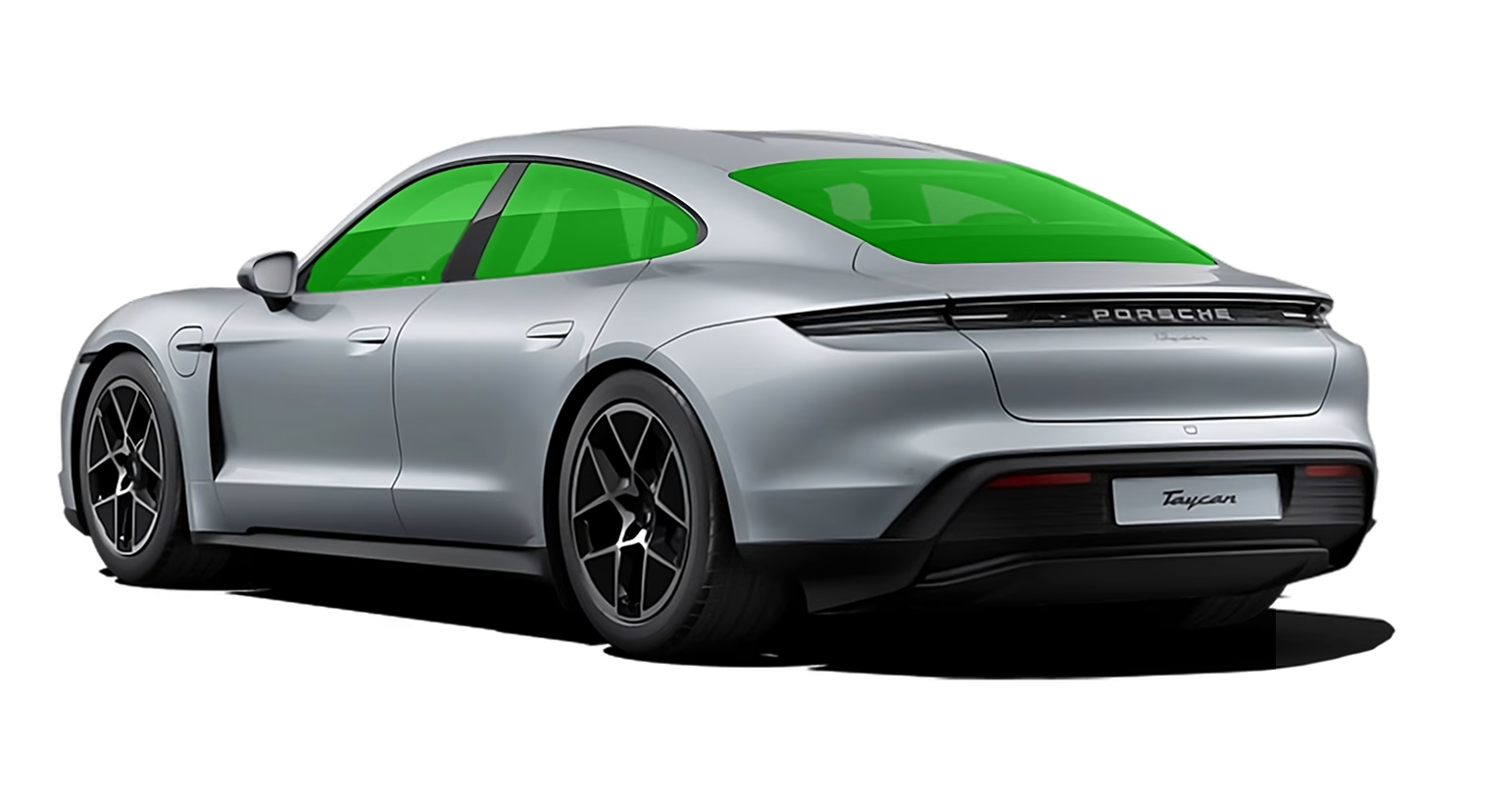
Note that our Bronze Carbon line is stocked from 50% down, so a 70% application means the Silver or Gold ceramic packages, the front two windows service, or the windshield service.
Is 70% tint legal?
This is the one tint level that is almost never a legal problem, which is a large part of its appeal.
California sets no darkness limit behind the driver, so any tint level is permitted on the rear windows. The constraint sits on the front side windows, where state law requires at least 70% light transmission measured with the factory tint included. Because untinted automotive glass already absorbs some light on its own, the combined figure is what counts and the headroom is small, which is why high-transmission film exists as a product category and why your installer should meter your specific car rather than quote from a chart.
Compare that with darker tint levels. A 35% or 20% film is perfectly legal on the rear windows and not legal on the front sides, so most compliant setups run dark behind the driver and a lighter tint up front. Limo tint at 5% sits at the far end of the same scale and is rear-only for the same reason.
State laws are also amended from time to time, and enforcement is by roadside meter with the citation going to the driver, so check current California requirements before choosing a tint level. California does provide a medical exemption route for drivers with a documented need for greater protection, which is worth asking about rather than assuming. For most people, legal compliance here is simply a matter of keeping the front glass within the legal limit and putting whatever they like behind it. The detail is in our guide to California tint legality.
Where 70% earns its place
Windshield and front windows. California requires the front sides to transmit more than 70% of visible light, and the measurement counts the factory glass as well as the film. Factory glass is not perfectly clear, so the combined figure is what matters and there is very little headroom. High-transmission film is the only category in the conversation for that glass, which is why it exists. Ask your installer to measure your specific vehicle rather than assuming.
Tint on the windshield. Same logic, more so. Heat rejection without darkness is exactly what a windshield application needs, which is covered in 50 vs 70 windshield tint.
Cars where you do not want tinted windows to show. Classics, concours cars, leased vehicles being handed back, and anything where the owner wants the factory look preserved. The film comes off later without a trace of the car having been changed.
Drivers who dislike dark glass. Plenty of people find a darker tint claustrophobic or struggle with it at night. 70% gives them the thermal benefit with none of that.
The San Diego argument
Two local realities make near-clear film a better deal here than it would be in a cooler, cloudier place.
The first is simple sun exposure. Cars parked outdoors all day, whether in an open lot in Kearny Mesa or on a driveway in Poway, take a full day of it most of the year. The UV load on an interior here is high and continuous, and dashboards, door tops and leather seats show it within a few years.
The second is coastal glare. Low afternoon sun coming off the water on a westbound drive through La Jolla is one of the more genuinely tiring driving conditions in the county, and a quality film softens it without darkening the glass.
Neither of those problems is solved by darkness. Both are improved by film construction.
When no tint is the right answer
We would rather say this than sell something that is not needed.
If the car lives in a garage, is driven mostly at night or in winter, and is due to be sold shortly, the case for windshield and front-window film is weak. Likewise if your budget only stretches to one thing and the rear compartment is where your family actually sits, spend it there instead.
And if you already have good factory glass with a solar coating, some newer vehicles do meaningfully attenuate infrared already. Worth asking about your specific model before adding film to it.
What it costs
70% is included as a shade choice at no extra cost in the packages that offer it, so this is a decision about which line to buy rather than which shade. Tint installation is priced by vehicle and film line, never by how light or dark you choose to go.
The most common purchase in this article’s territory is the front two windows on their own, usually for someone whose rear glass is already dark and who wants heat rejection up front:
| Front two windows | Price | Heat rejection |
|---|---|---|
| C2 Carbon | $149 | 50%, in shop only |
| Pro Nano Ceramic | $199 | 76% |
| Apex Ultra Ceramic | $249 | 95% |
Full-vehicle packages run $349 to $499 for Silver Ceramic and $549 to $699 for Gold Ceramic, covering every window except the front windshield and sunroof. Silver and Gold carry a lifetime film warranty. Pricing detail is on the mobile window tinting page.
The short version
On 70 tint vs no tint, the film wins for anyone whose car sees real sun, provided you understand what you are buying. You are not buying a darker car. You are buying 99% UV rejection and up to 95% heat rejection in a film almost nobody will notice.
If you want privacy, 70% is not your shade and no amount of film technology will change that. If you want a cooler, less faded, less glaring car that looks exactly as it does now, this is the most under-rated option on the board, and it keeps you within the legal limits everywhere on the vehicle.
Smith Bros installs throughout San Diego County. Call (760) 310-1532 or book online.
This article is general information, not legal advice. Check current California requirements with the DMV or CHP before choosing a tint level.