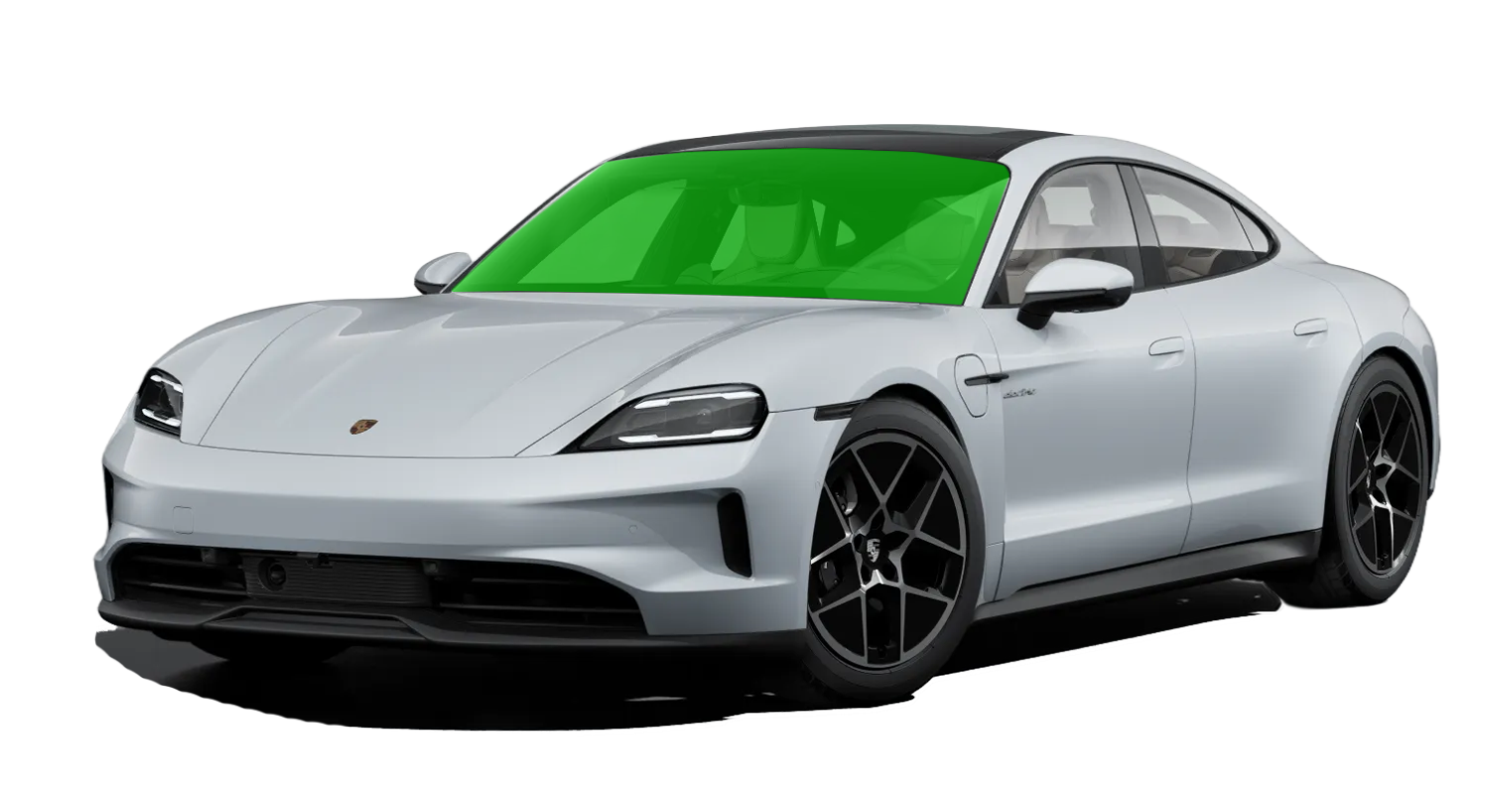
Film for the front glass is a different purchase from the rest of the car, and the shade question has a different answer here than it does anywhere else on the vehicle.
70% is the tint percentage almost every front-glass application uses. It stays close to clear, keeps the driver’s view unobstructed, and still rejects most of the heat, because heat rejection comes from the ceramic construction rather than the darkness.
50% is visibly darker. Here that matters, because California restricts darkness on the windshield far more tightly than on any other window.
Why the front glass is its own problem
Three things set it apart from the side windows.
It is the largest pane on the car, and it faces the sun most directly when you are driving. On a west-bound afternoon commute it is doing more to heat the cabin than every other window put together. That is why people buy this window film in the first place.
It is the glass you actually look through. Side windows are for awareness. This is the primary field of view, and anything that reduces clarity, introduces haze or distorts at an angle is a genuine safety issue rather than an aesthetic one.
It is the most regulated. California permits a non-reflective strip across the top four inches of the windshield. Darkness across the rest of it is not permitted. Full-pane film is therefore fitted in high-transmission versions chosen for what they block invisibly, not for how dark they look. The enforcement picture is covered in our guide to California tint legality.
That last point is the reason this comparison resolves the way it does. Check current California requirements before choosing a film, and be skeptical of any installer who offers to fit a dark one without mentioning them.
Choosing a tint percentage for the front glass
| 70% VLT film | 50% VLT film | |
|---|---|---|
| Visible light transmission | 70% | 50% |
| Appearance on glass | Near-clear, easy to miss | Visibly shaded |
| Driver’s field of view | Essentially unchanged | Perceptibly darker, more so at dusk |
| Heat rejection | Up to 95%, from the ceramic construction | Same film line, same rejection |
| UV protection | 99% of UV rays blocked | 99% of UV rays blocked |
| Glare reduction | Good | Slightly better, at a cost to clarity |
| Night driving | No meaningful impact | Reduced, particularly on unlit roads |
| Typical use | Full front-glass application | Rare on a full pane |
The row that surprises people is heat: the two are the same. Within one film line, a 70% and a 50% reject the same proportion of infrared. Going darker buys you almost nothing thermally, while costing you clarity and running into the rules. That is an unusually one-sided trade-off, and it is why the lighter tint percentage wins here when it does not always win elsewhere.
A light tint at 70% is practically transparent on the glass, nearly invisible, and most people cannot tell it is fitted, while a dark tint of the sort that suits rear windows would be obvious and non-compliant here. That is the whole reason darker tints and this pane do not mix, and it holds across the types of window tint we install, whether you choose carbon or ceramic.
It is worth saying that the film still works hard at this setting. It will reduce glare, cut heat and block UV on the front side windows and the pane ahead of you alike; it simply does so without announcing itself.
What ceramic window tint does on the front glass
The whole case for this film rests on the difference between visible light and heat.
Visible light is what you see and what darkness blocks. Infrared heat is the bulk of what you feel. A ceramic tint uses nano-ceramic particles that absorb and reflect infrared while letting visible light pass, which is how a near-clear window tint can reject up to 95% of heat. A cheap dyed film cannot do that: dye absorbs visible light, so it goes dark without solving the problem you bought it for. That difference between ceramic and carbon films is where the money goes.
Our service uses GeoShield Pro Nano Ceramic or Apex Ultra Ceramic, both rated for high optical clarity and both giving 99% UV protection. That figure is worth dwelling on here specifically: this is the pane your hands, arms and face sit behind for every mile you drive, and blocking UV radiation is what stops the fading you see on the top of a dashboard after a few San Diego summers. Good visibility by day and that level of protection from sunlight in the same film is the point: you are not choosing between them.
Optical clarity is not a marketing word here either. A cheap film on this pane can introduce haze that is invisible at noon and blinding at dusk with headlight glare coming toward you. This is the one piece of glass where paying for the better film line is not a luxury.
The San Diego case for front-glass film
If you park outside in Kearny Mesa, Miramar or Sorrento Valley, your car spends its working day pointed at the sun in an open lot. The front glass is the single biggest contributor to the temperature you find when you get back in, so heat reduction here is felt more than anywhere else on the vehicle.
Coastal drivers get a second benefit. Low sun over the water on a westbound afternoon run through Pacific Beach or La Jolla produces glare that a quality film measurably softens, and that glare reduction arrives without darkening the glass to achieve it.
And inland, where afternoon temperatures run highest, the argument is straightforward cabin comfort, less strain on the air conditioning, and film that helps protect the interior over the years.
None of those cases call for dark glass. They call for effective film.
Who should consider 50%
Honestly, very few people, and not on the main viewing area.
Where a 50% shade does come up sensibly is elsewhere on the vehicle. It is a genuinely good choice on the front windows in states that permit it, on rear windows where a driver wants light privacy, and on sunroofs. Within our range it is offered across the film lines for exactly those uses.
If your reason for asking about 50% here is that you want more heat rejection, the answer is that you already have it at 70%. If the reason is glare, a quality ceramic at 70% handles it well. If the reason is appearance, that is the reason the rules exist to say no, and it is not worth having to worry about fines over.
What it costs
This is a separate service. Every side-window package explicitly excludes the front windshield and the sunroof, so the work is either booked on its own or added to a window tint package as an upgrade.
| Vehicle | Pro Nano Ceramic | Apex Ultra Ceramic |
|---|---|---|
| Coupe | $299 | $399 |
| Sedan | $299 | $399 |
| Compact SUV | $299 | $399 |
| Truck | $399 | $499 |
| Full-size SUV | $399 | $499 |
Both carry a lifetime film warranty. Prices are estimates until we have seen the vehicle, since glass size and rake vary a lot, and a covered area is recommended for installation. Full pricing is on the mobile window tinting page.
If you are having the rest of the car done at the same time, adding this at booking is the efficient way to do it, since the vehicle only needs to be free once. Tint installation on this pane is the most demanding job on the car, which is another argument for the better tint film rather than the cheapest quote.
Two last points worth knowing. Factory tint varies between models, so the finished result differs slightly from car to car even with the same film. And California does provide a medical exemption route for drivers with a documented need for greater protection from sunlight; local laws are set at state level, so check the current requirements with the DMV or CHP rather than relying on what a neighboring state allows.
Who should choose which
Take 70% for any full-pane application. It is the tint percentage that keeps the glass near-clear, keeps your view unchanged at night, delivers the film line’s full heat rejection and UV protection, and sits comfortably with California’s approach to the front windshield.
Do not take 50% for the main viewing area. Consider it instead for rear glass or a sunroof, where darkness is permitted and the trade-offs are different.
If heat is the objective, which it nearly always is here, spend the difference on the Apex Ultra line at 70% rather than on a darker shade of the cheaper one. That is where the extra performance actually lives, and it is the more cost-effective choice over the life of the car.
The short version
On 50 vs 70 windshield tint, 70% is the answer. The two shades reject the same heat within a film line, so darkness buys nothing thermally while costing clarity, night visibility and compliance headroom on the one piece of glass California regulates most tightly.
Buy the film line, not the tint percentage. A 70% ceramic window tint rejecting up to 95% of heat, with 99% UV protection and real glare reduction, is the upgrade worth having, and most people cannot tell it is there.
Smith Bros installs across San Diego County. Call (760) 310-1532 or book online and we will quote your vehicle specifically.
This article is general information, not legal advice. Windshield rules are strict and subject to amendment, so confirm current California requirements with the DMV or CHP before booking.