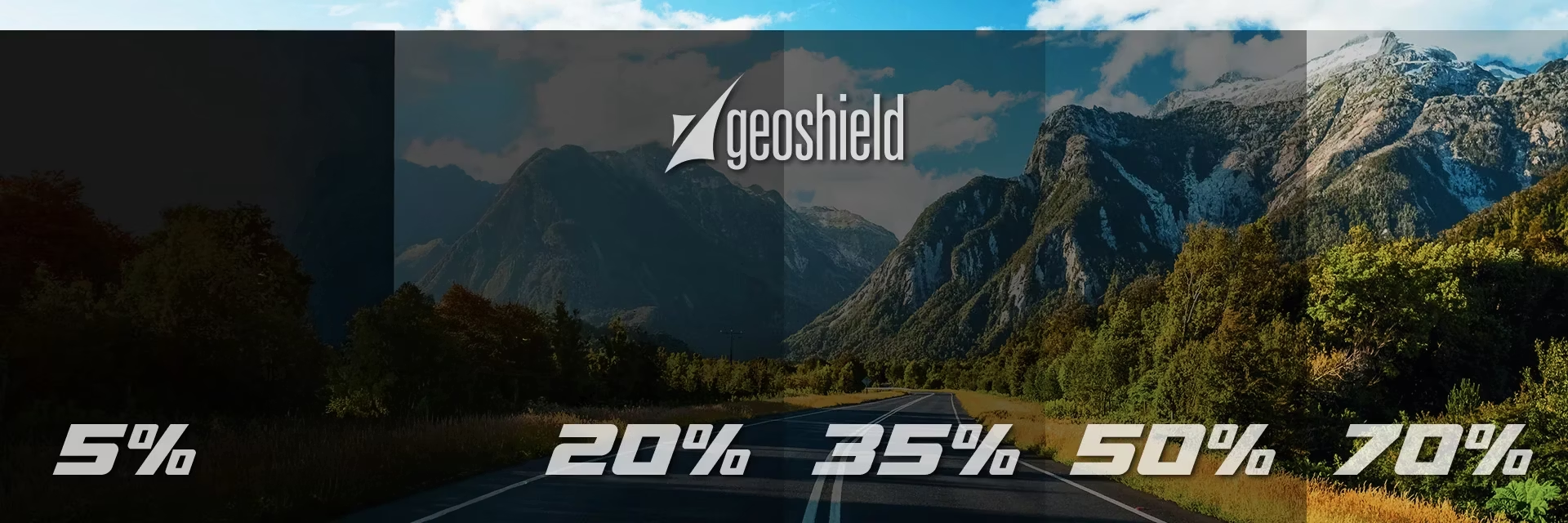
This is the single most asked tint question in San Diego, and the honest answer is not the one most people want. It is also more useful than a simple yes or no, because the law treats different windows completely differently.
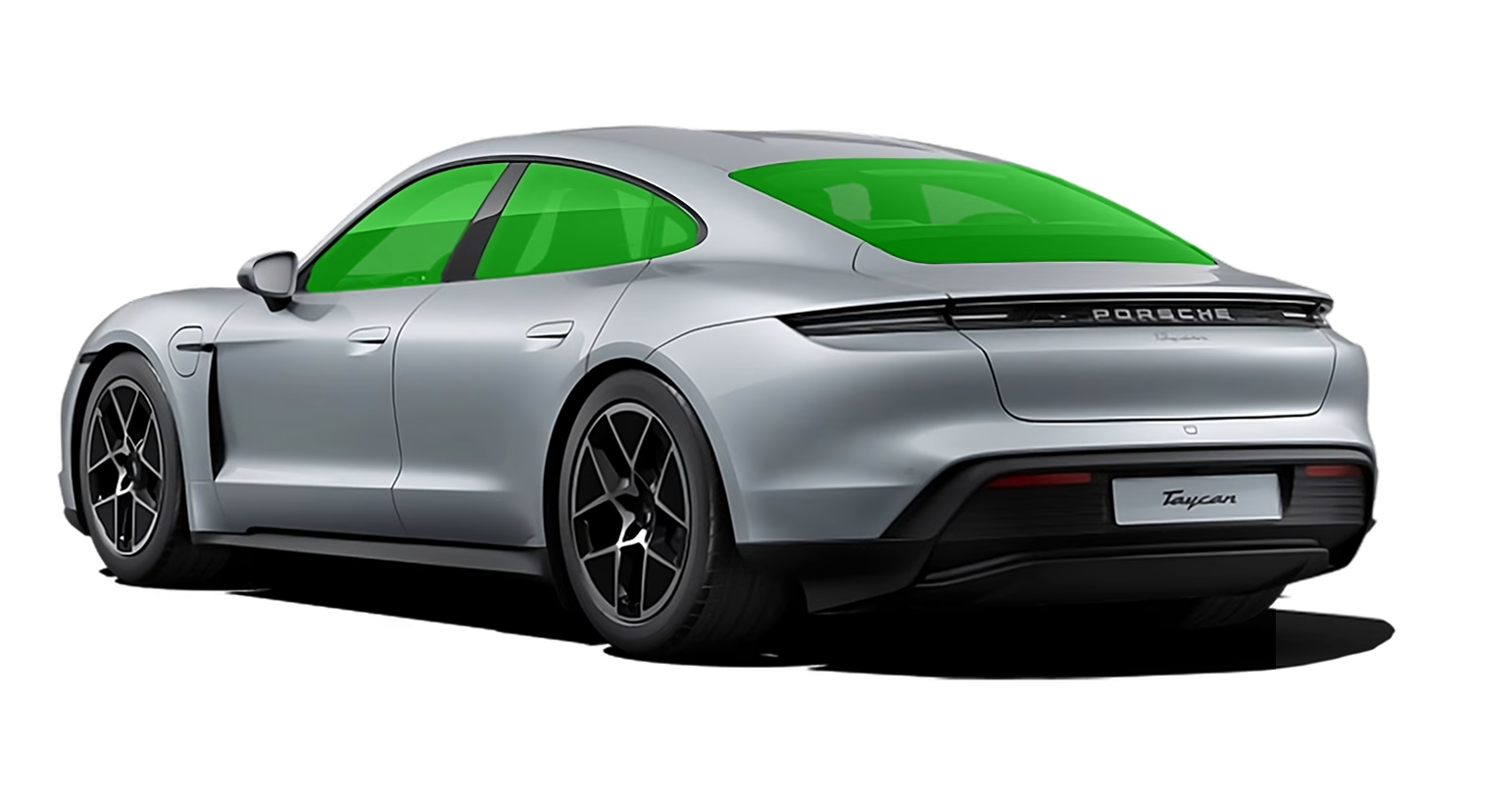
On the rear side windows and rear windshield, 20% tint is legal in California.
On the front side windows, it is not. Those must allow more than 70% of visible light through, and 20% film is nowhere near that.
What the California rule actually says
California measures tint as visible light transmission, or VLT, which is the percentage of light that passes through. A 20% film lets 20% of light through and blocks the rest. Lower number means darker.
The rules break down by window.
| Window | What California allows |
|---|---|
| Front side windows | Must allow more than 70% VLT, film and glass combined |
| Rear side windows | Any darkness |
| Rear windshield | Any darkness, if the vehicle has both side mirrors |
| Front windshield | Top 4 inches only, non-reflective |
The detail that catches people out is in the front side windows row: film and glass combined. Factory automotive glass is not perfectly clear. It typically transmits somewhere in the region of 75 to 85 percent of light on its own. Once you account for that, the amount of film you can add before dropping under 70% is very small.
In practice this means the front side windows can take a very light film and little else. A 20% film on the front sides is not a marginal call. It is several times darker than the limit.
So why do shops sell 20%?
Because it is legal to install on the windows where it is allowed, and because it is a popular look.
Smith Bros offers 70%, 50%, 35%, 20% and 5% across its ceramic tint packages. All of those darkness levels are legal somewhere on the vehicle. A very common and fully compliant setup is a dark film on the rear side windows and rear windshield for privacy, paired with a high transmission film on the front sides that clears the 70% requirement.
The film is legal. Putting the dark version on the wrong window is what creates the problem, and the citation lands on the driver rather than the installer.
What happens if you get stopped
Illegal front tint is usually written as a correctable violation, commonly called a fix-it ticket. You remove the film, get the correction signed off, and pay an administrative fee. Repeat offenses and aggravated cases can be treated less leniently.
Two practical points. First, officers can measure VLT at the roadside with a meter, so “it looks about right” is not a defense. Second, the ticket is issued to whoever is driving. If you bought the car with tint already installed, that is still your problem to fix.
Tint is also a routine reason for a stop in the first place, which some drivers care about more than the fine itself.
The part almost nobody realizes: darkness is not what blocks heat
This is where the conversation usually turns, because most people asking about 20% do not actually want darkness. They want the car to stop being an oven in a Kearny Mesa parking lot in August.
Those are different properties. Heat rejection comes from the film’s construction, not its shade. Modern ceramic films use nano-ceramic particles that reject infrared radiation while staying comparatively light to look through. A cheap dyed film can be very dark and still let the cabin cook.
The Smith Bros tint tiers show the split clearly:
| Package | Film | Heat rejection | UV rejection |
|---|---|---|---|
| Bronze Carbon | GeoShield C2 Carbon | 50% | 99% |
| Silver Ceramic | GeoShield Pro Nano Ceramic | 76% | 99% |
| Gold Ceramic | GeoShield Apex Ultra Ceramic | 95% | 99% |
Every one of those is available in 70% VLT, the lightest option. So a Gold Ceramic film at 70% on the front side windows rejects up to 95% of heat while staying comfortably legal, and it looks almost clear.
A 20% dyed film would be far darker, illegal on those windows, and reject less heat. If comfort is the goal, the legal choice is genuinely the better one.
What it costs
Full pricing is on the mobile window tint page. In summary:
| Package | Coupe | Sedan | Compact SUV | Truck | Full-size SUV |
|---|---|---|---|---|---|
| Bronze Carbon | $249 | $299 | $329 | $349 | $399 |
| Silver Ceramic | $349 | $399 | $429 | $449 | $499 |
| Gold Ceramic | $549 | $599 | $629 | $649 | $699 |
Those cover all windows except the front windshield and sunroof. Front two windows on their own run $149 for carbon, $199 for Pro Nano Ceramic and $249 for Apex Ultra Ceramic, which is the usual route for someone who already has rear tint and wants legal heat rejection up front.
Silver and Gold carry a lifetime film warranty. Bronze carries three years and is shop only.
Practical guidance
If you want privacy, put the dark film behind the driver where California allows any darkness, and keep the front sides at 70%.
If you want a cooler car, buy the film technology rather than the shade. Ceramic at 70% on the front windows will outperform a dark dyed film and will not attract a ticket.
If you bought a car with dark front tint already on it, that is now your citation to collect. Removal is straightforward, though film that has been baking on for years can be stubborn and can carry some risk to rear defroster lines, which is covered in the window tint disclaimer.
And if you have a documented medical need for greater UV protection, California does provide an exemption route. It requires a signed statement from a licensed physician or optometrist kept with the vehicle. Check the current DMV and CHP requirements directly, since the specifics matter and do get updated.
The short version
20% tint is legal on the rear windows in San Diego and illegal on the front side windows, where California requires more than 70% VLT counting the glass itself. Enforcement is by meter, and the fix-it ticket goes to the driver.
If heat is what you are actually solving for, a 70% ceramic film rejects far more of it than a dark dyed film and keeps you legal. Smith Bros installs across San Diego County and can advise on your specific vehicle. Call (760) 310-1532 or book online.
This article is general information, not legal advice. Vehicle codes are amended, so confirm current requirements with the California DMV or CHP before making a decision based on darkness.