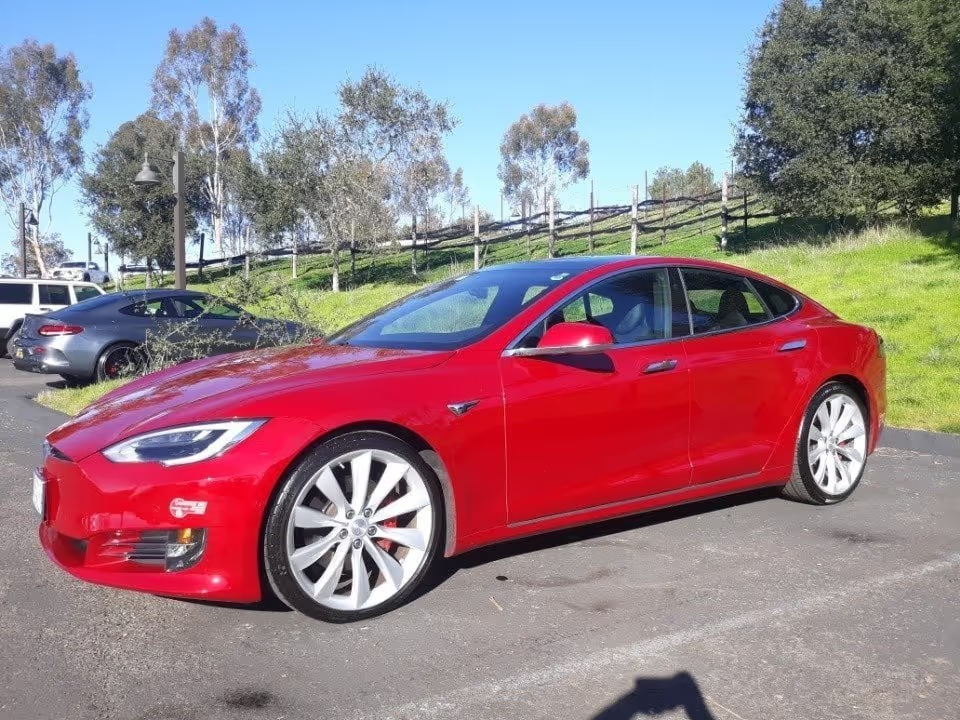
20 window tint vs 35 is the most common decision people face once they have decided to tint, and it is usually made on a phone screen looking at photos of other people’s cars. That is the wrong way to pick, because the difference between them shows up in situations a photo cannot capture.
Choose 35% if you drive at night, park in unlit areas, or want tint that reads as factory. It blocks 65% of visible light and stays easy to see out of after dark.
Choose 20% if privacy is the point. It blocks 80% of visible light, and it is the shade at which people genuinely stop looking into your car.
Both are legal behind the driver in California. Neither is legal on the front side windows.
What the tint percentage actually means
A tint percentage is a VLT figure: visible light transmission, the share of light the window film lets through. Lower number, darker film. A 20% film transmits 20% and blocks the other 80%. A 35% film transmits 35% and blocks 65%.
So 20 percent tint is not “slightly darker” than 35 percent. It cuts roughly twice as much of the remaining light. On paper that is a 15 point gap. On the car it is the difference between glass you can still see a silhouette through and glass you cannot.
Both are dark enough that choosing the right one matters more for the sides and rear than for how the car looks from across a parking lot.
One thing worth clearing up before anything else: this article is about choosing a shade, not about legality. That side is covered properly in our guide to whether 20% tint is legal in San Diego, and the short version is that California treats each window differently. Any darkness is allowed behind the driver. The front side windows have a legal limit of more than 70% light transmission, counting the factory glass, which rules out both shades in this comparison up front.
20 window tint vs 35, side by side
| 35% tint | 20% tint | |
|---|---|---|
| Light blocked | 65% | 80% |
| Daytime privacy | Moderate. Shapes visible, detail obscured | Strong. Interior hard to read from outside |
| Night-time visibility | Close to untinted. Most drivers notice nothing | Noticeably reduced, especially reversing |
| Look on a light-colored car | Subtle, close to factory privacy glass | Clearly aftermarket, strong contrast |
| Glare reduction | Good | Very good |
| Heat rejection | Set by film line, not shade | Set by film line, not shade |
| Legal on front sides in CA | No | No |
| Legal behind the driver in CA | Yes | Yes |
| Price at Smith Bros | Same within a tier | Same within a tier |
Which one looks darker, and by how much
On a white or silver car the difference is obvious. 35% reads as a light smoke that many people mistake for factory privacy glass on the rear windows. 20% reads unmistakably as tint.
On a black car the gap narrows visually, because the surrounding paint is already dark and there is less contrast for the eye to judge against. Plenty of drivers with black cars go to 20% precisely because 35% looks like almost nothing against the bodywork.
Worth knowing: most SUVs and trucks leave the factory with the rear glass behind the B-pillar already darkened. If you tint only the fronts of the rear compartment to match, a 35% film over factory privacy glass ends up considerably darker than 35% on its own, because the two layers stack. We check the existing glass before recommending a shade for exactly this reason.
This is also why the VLT percentage on the box is a starting point rather than a promise. On a vehicle with heavily darkened rear glass, a 20% film can leave the back genuinely hard to see through at night, and we would usually steer you to 35% there instead.
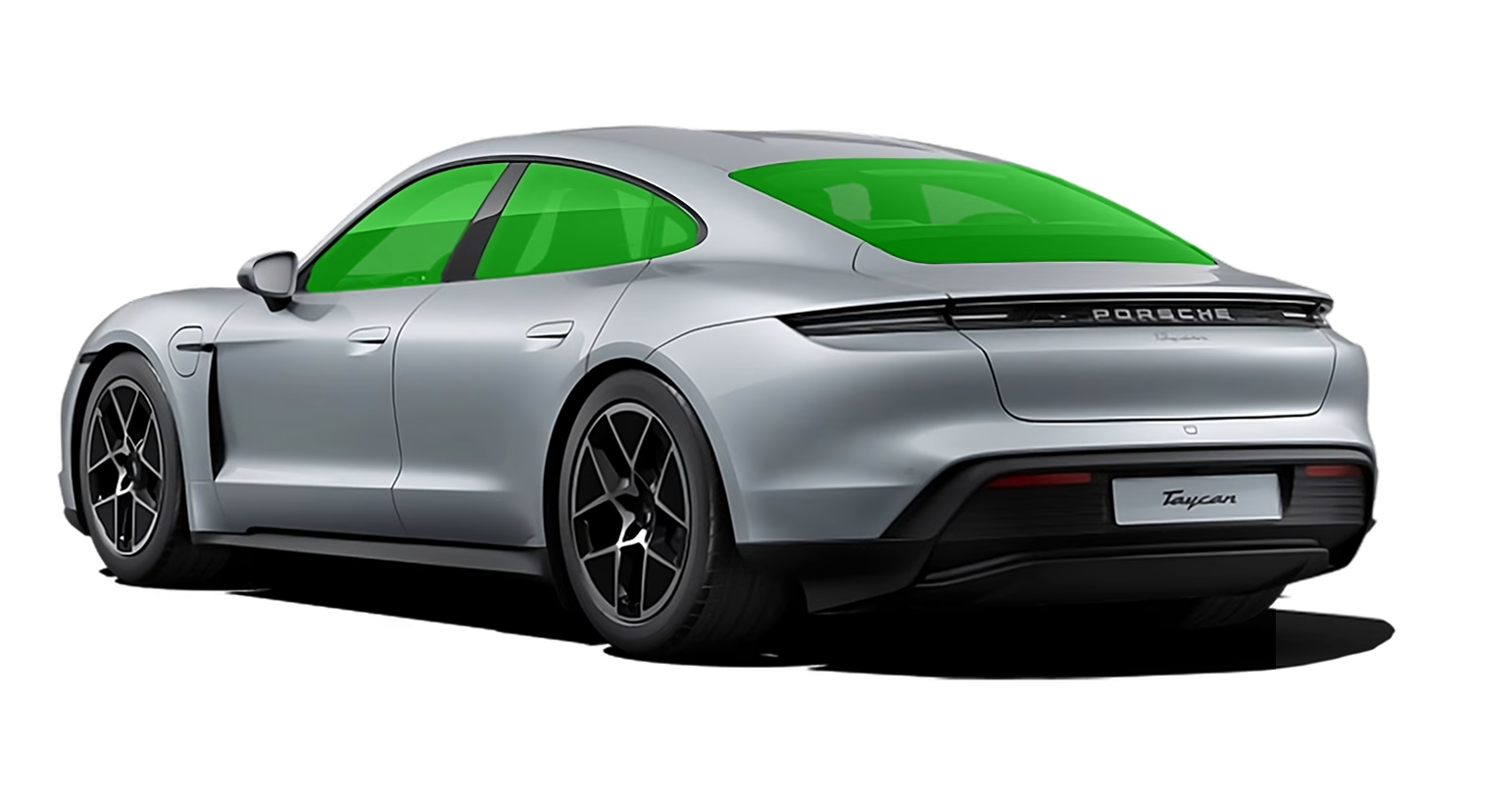
Night driving is the real deciding factor
This is where the two shades genuinely part company, and it is the part people underestimate.
At 35%, most drivers report no meaningful change after dark. You notice it reversing into a badly lit space and that is about the extent of it.
At 20%, you will notice. Reversing out of a driveway at night, checking a blind spot on an unlit stretch, or picking a pedestrian out of a dark side street all get harder. On poorly lit roads it is genuinely harder to see through the back window than through the door glass, because you are looking through tint at a greater angle. Not dangerous for a driver who is used to it and adjusts, but harder. Age matters here too, since night vision declines with it, and a tint that is comfortable at twenty-five is not always comfortable at sixty.
Our honest guidance: if you are hesitating between the two and you drive at night regularly, take the 35%. Nobody has ever called us wishing they had gone darker after they got used to it. The reverse call happens more often.
One practical note on nighttime use. Factory glass already cuts some light before any film goes on, so what you experience at night is the film and the glass together rather than the VLT percentage on its own. On an older car with tired headlights, tint at night is harder work than the same film on a new one, and that is worth weighing before you pick between the various shades on offer.
The heat question, which is not what you think
Most people asking about 20 vs 35 are partly asking “which one will keep my car cooler”. The answer is that this is very nearly the wrong question.
Heat rejection is a property of how the film is constructed, not how dark it looks. Our three film lines make the point clearly:
| Package | Film | Heat rejection | UV rejection |
|---|---|---|---|
| Bronze Carbon Tint | GeoShield C2 Carbon | 50% | 99% |
| Silver Ceramic Tint | GeoShield Pro Nano Ceramic | 76% | 99% |
| Gold Ceramic Tint | GeoShield Apex Ultra Ceramic | 95% | 99% |
Every one of those figures holds regardless of whether you order it at 35% or 20%. A 35% Apex Ultra Ceramic rejects dramatically more heat than a 20% carbon film, despite being the lighter of the two. If a cooler cabin is the goal, spend the money on the film line and treat the darkness as a styling decision. Heat reduction comes from construction, not shade.
The films to be wary of are the cheap dyed ones, where dye in the layer absorbs light: dark to look at, weak on heat and UV, and prone to fading. Ask any installer which construction they are quoting before you compare prices, because heat and UV performance is not visible on the glass. We go into the material differences in detail in ceramic tint vs regular tint.
Which suits San Diego better
Both work here. The local conditions push the decision in different directions depending on where you actually spend your time.
Along the coast, from La Jolla through Encinitas, the dominant complaint is glare rather than raw temperature. Low afternoon sun coming off the water is relentless, and both shades handle it well. 35% is the more popular choice on this side of the county because the marine layer means genuinely dark mornings.
Inland, in Escondido, El Cajon and Santee, summer cabin temperatures are the driver and privacy tends to matter more because vehicles sit in open lots all day. 20% on the rear is common here.
If the car lives outside overnight and you value not advertising what is in it, 20% behind the driver does that job better. That is a security argument rather than a comfort one, and it is a legitimate reason to take the darker option.
Who should choose which
Take 35% if: you drive after dark regularly, you want tint that passes as factory, you carry passengers who dislike feeling closed in, or you are tinting a car you plan to sell soon and want broad appeal.
Take 20% if: privacy is the actual goal, your vehicle parks outside in public, you have a black or dark gray car and want the tint to read, or you already have factory privacy glass and want the fronts of the rear compartment to match it.
Take neither on your front side windows. Both are well past the California limit for that glass. The usual compliant setup is a dark film behind the driver and a high-transmission film up front, which is a route worth reading about in 70 tint vs no tint.
What it costs
The shade does not change the price. Choosing 20% over 35% costs nothing extra, because each package includes your choice of film shade. What changes the price is the film line and the size of the vehicle.
Full pricing sits on the mobile window tinting page. Bronze Carbon runs $249 to $399 depending on vehicle, Silver Ceramic $349 to $499, and Gold Ceramic $549 to $699, each covering all windows except the front windshield and sunroof. Silver and Gold carry a lifetime film warranty; Bronze carries three years and is shop-only.
One note specific to this comparison: Bronze Carbon is offered in 50%, 35%, 20% and 5%. Both shades in this article are available in every film line we install.
The short version
On 20 window tint vs 35, 35% is the safer everyday choice and 20% is the privacy choice. 35% blocks 65% of light and leaves night visibility largely intact. 20% blocks 80% and genuinely obscures the interior, at some cost after dark. Both are legal behind the driver in California and neither is legal on the front sides.
If heat is what you are really solving, choose the film line rather than the shade. We install across San Diego County and can hold both samples against your own glass before you commit. Call (760) 310-1532 or book online.
This article is general information, not legal advice. Vehicle codes are amended, so check current California requirements with the DMV or CHP before choosing a tint level.