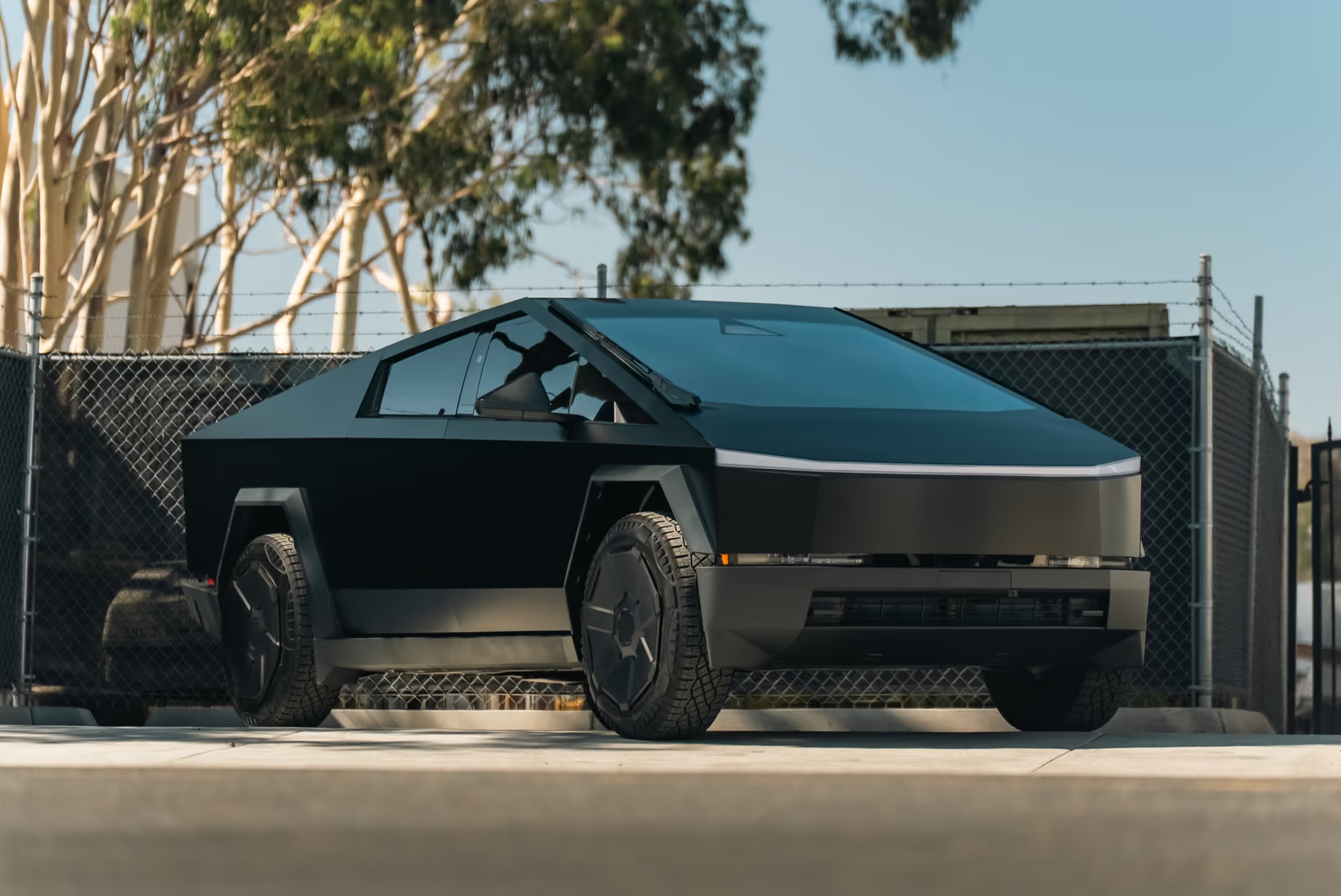
This comparison is different from the others in the range, because 5% is not simply one more step down the scale. It is the end of the scale, and it changes how you interact with the vehicle.
5% is limo tint. It blocks 95% of visible light. From outside in daylight the glass reads as opaque. You cannot usefully see out of it at night.
20% is the practical privacy shade. It blocks 80%, obscures the interior in normal conditions, and still lets you use the rear window after dark.
Both are legal only behind the driver in California. Neither belongs on the front side windows.
What the window tint percentage means
Both numbers are VLT figures. Visible light transmission is the share of light a window film lets through, so a lower VLT means a darker tint. A 5% film transmits 5% of the light hitting the glass; a 20% film transmits 20%. The window tint percentage runs backwards from how most people read it: the smaller the number, the darker the tint shade.
Two things follow. First, the percentage describes the film, not the finished pane. Factory tint on the glass already absorbs some light, so the installed result on your rear windows and back windows ends up marginally darker than the number on the box. Second, the same window tint can be fine on one window and not another. California allows any darkness behind the driver, while a front window is held to a far higher transmission standard, which is why neither of these belongs up front.
Worth separating two things people often merge. Darkness buys you privacy. It does very little for heat reduction, and nothing extra for UV rays, since every film we install blocks 99% of them at any shade. So if you are choosing 5% for maximum privacy, that is a sound reason. If you are choosing it to keep the car cool, you are pulling the wrong lever, and the section further down explains why.
The gap between them is bigger than 15 points
On a chart, 5% and 20% look adjacent. They are not.
Think of it as how much light the film lets through rather than how much is blocked. A 20% film passes 20 units of light. A 5% film passes 5. That is a quarter as much. Every remaining point of visibility you have at 20% gets cut to a fraction of itself at 5%.
This is why drivers stepping from 20% to 5% describe it as a completely different car, while drivers stepping from 35% to 20% describe it as a bit darker. The scale is not linear in how it feels: 5% tint is much darker in practice than the numbers imply.
5% vs 20% side by side
| 20% tint | 5% tint | |
|---|---|---|
| Light blocked | 80% | 95% |
| Common name | Privacy tint | Limo tint |
| Daytime view in | Silhouettes visible, detail obscured | Effectively opaque |
| Night-time view out | Reduced but usable | Very poor, mirrors and camera become primary |
| Rear visibility after dark | Workable | Most drivers stop relying on it |
| Suits a daily driver | Yes | With reservations |
| Legal behind driver in CA | Yes | Yes |
| Legal on front sides in CA | No | No |
| Price at Smith Bros | Same within a tier | Same within a tier |
What 5% is actually for
There are good reasons to run it, and they are more specific than “I want it dark”.
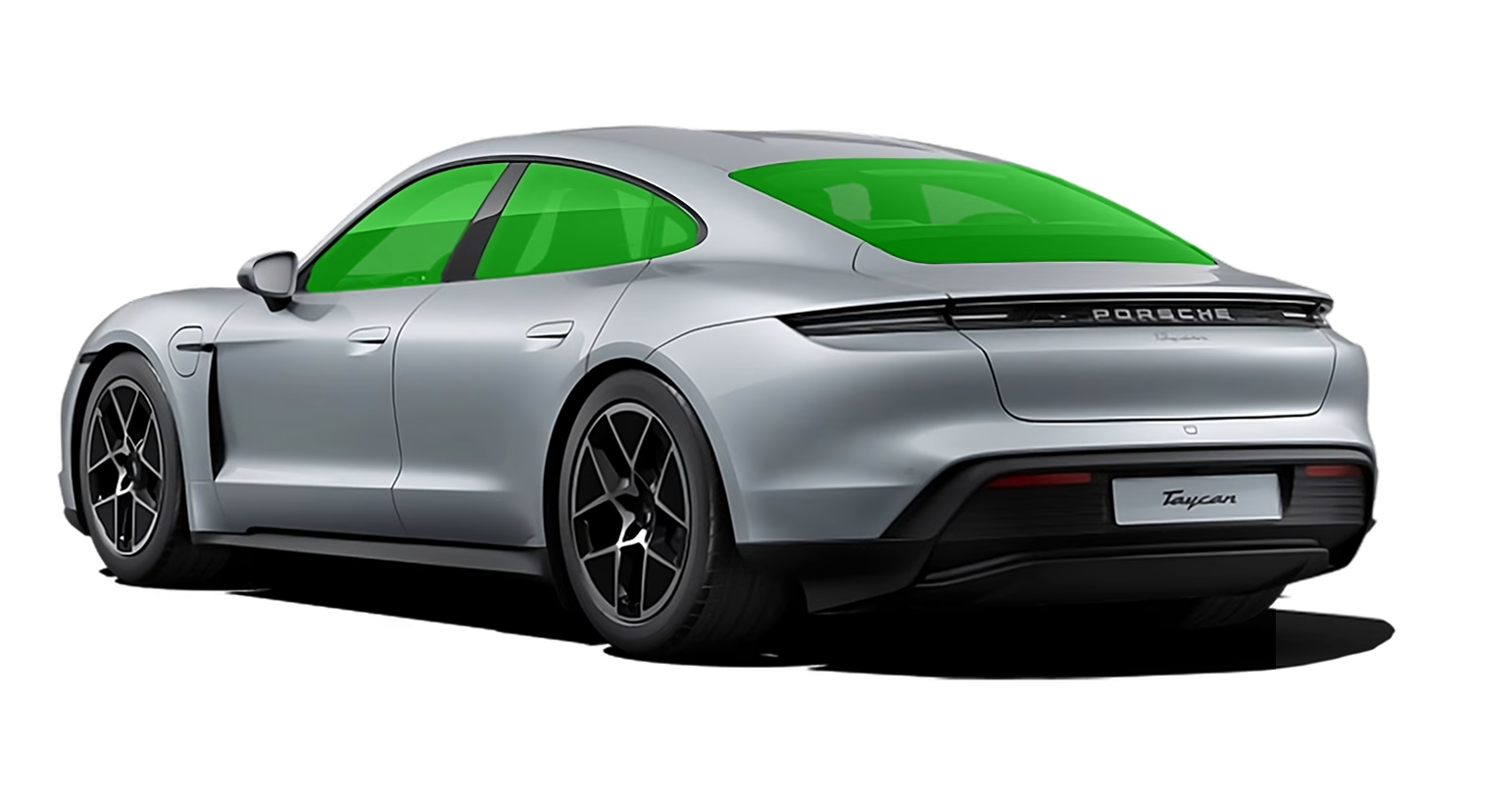
Cargo and equipment. Vans, work vehicles and anything where the rear compartment holds tools or stock. 5% means nobody window-shops your load in a parking lot. This is probably the strongest single case for it.
Rear passenger privacy. Vehicles used for client transport, or families who want children in the back genuinely shielded from the sun and from view.
Vehicles where the rear glass is not a driving aid. If you have a reversing camera, cross-traffic alert and blind spot monitoring, the rear window is doing less work than it used to. Drivers of such vehicles tolerate 5% far better than drivers of a fifteen-year-old sedan.
Matching existing factory tint. Some SUVs come with very dark factory privacy glass. Adding 5% to already-dark glass produces a stack far darker than either layer; adding it to the lighter forward glass in the rear compartment is sometimes how people match a look.
What 5% is not for is the whole car. Nobody should be putting it on front side windows in California, and we would not install it there.
Night visibility is the whole argument
At 20% you lose some night visibility and adapt within a week.
At 5% you do not adapt, you compensate. Rear visibility stops being something you rely on: the back window becomes a thing you look past rather than through, and you will find it hard to see out the back on an unlit street. Reversing happens on the camera. Lane changes happen on mirrors and shoulder checks through the front side glass, which is why the California rule keeping that glass clear matters more, not less, once the rear is dark.
Two situations where drivers most often regret 5%: reversing out of an unlit driveway, and parallel parking on a dark residential street. Both are common in older San Diego neighborhoods where street lighting is sparse and curbside parking is tight, and both involve driving at night with heavily tinted windows behind you.
If either of those is your daily reality, 20% is the shade that gives you the privacy without the compensation.
Heat: neither one is the answer
It is tempting to assume the darkest film must be the coolest car. It is not how the physics works.
Visible light is a fraction of the solar energy hitting the glass. Most of it arrives as infrared heat, which is invisible, and blocking that is a function of how the tint film is built rather than how dark it is. This is the single most useful thing to understand when choosing the right tint: a dark tint and a cool cabin are separate purchases.
| Package | Film | Heat rejection | UV rejection |
|---|---|---|---|
| Bronze Carbon Tint | GeoShield C2 Carbon | 50% | 99% |
| Silver Ceramic Tint | GeoShield Pro Nano Ceramic | 76% | 99% |
| Gold Ceramic Tint | GeoShield Apex Ultra Ceramic | 95% | 99% |
A 20% Apex Ultra Ceramic will leave the cabin cooler than a 5% carbon film, comfortably. So if the reason you were reaching for 5% was heat, the honest answer is that you were reaching for the wrong variable. The film line does that work. We cover why in ceramic tint vs regular tint.
Note that all three lines reject 99% of UV regardless of shade. UV and heat protection for your interior and your skin is not something you buy darkness for. A cheap dyed tint at 5% gives you neither.
If heat is the real problem, ceramic window tint at a lighter setting will beat limo tint from a cheaper range every time. That is worth knowing before you spend, because a car window tint job is not something you want to pay for twice.
The San Diego angle
Two local factors push against 5% and one pushes for it.
Against: the marine layer. Coastal mornings in Pacific Beach, Cardiff and Del Mar are genuinely gray and dim well into the day for much of May and June. Very dark glass in flat gray light is harder work than the same glass in bright sun.
Also against: unlit residential streets in older parts of the county, where reversing off a driveway at night is a daily event.
For: vehicles that sit in open lots all day in the inland heat, around El Cajon, Santee and Lakeside, where an obscured interior is a real deterrent and the car is parked far more than it is driven after dark.
Who should choose which
Choose 20% if the vehicle is a daily driver, anyone other than you drives it, you reverse in the dark, or you want strong privacy without rethinking how you use the mirrors.
Choose 5% if the rear compartment is cargo, the vehicle has a full suite of cameras and sensors, privacy is a security requirement rather than a preference, or the rear glass is already dark from the factory and you are matching it.
A common middle route: 5% on the rear windshield and rear quarters, 20% on the rear doors. Because California allows any darkness behind the driver, mixing tint shades back there is permitted, and it keeps the door glass usable while blacking out the cargo area. Ask about it when you book.
What the tint laws mean for these two
Neither of these is a front window tint in California, and that is the single most useful thing to know before booking.
The rule that catches people is on the front side windows, where the legal limit is set by transmission rather than by product name: the film and the factory tint together have to let more than 70% of light through. Behind the driver there is no darkness limit at all, provided the vehicle has both side mirrors, which is why 5% and 20% are both perfectly legal on the rear windows.
Enforcement is by meter at the roadside, and the citation goes to the driver rather than the installer, so buying dark tint from a shop that is relaxed about it does not transfer the risk. Tint tickets are usually correctable, but they are still your problem rather than the shop’s. The full picture, including fix-it tickets and the medical exemption route, is in our guide to 20% tint legality in San Diego. Check current California requirements before choosing a tint level.
What it costs
Shade is free. 5% and 20% cost exactly the same within any package, because your choice of film shade is included. Vehicle size and film line set the price.
Bronze Carbon runs $249 to $399, Silver Ceramic $349 to $499, and Gold Ceramic $549 to $699, all covering every window except the front windshield and sunroof. Both shades in this comparison are available across all three lines. Full detail is on the mobile window tinting page.
If you already have tint and want to go darker, removal is charged at $90 per hour, because old automotive window film has to come off before new film goes on. Film that has been baking on for a decade takes longer, and there is some risk to rear defroster lines, which the window tint disclaimer covers.
Tint installation itself is quick by comparison. What takes the time is preparation and, on a dark job, the removal underneath it, which is another reason to choose a legal tint you will keep rather than one you will be taking off again in a year.
The short version
On 5 vs 20 window tint, 20% is the shade most drivers actually want: strong privacy, manageable at night, no change to how you drive. 5% is a specialist choice that suits cargo vehicles, camera-equipped vehicles and drivers for whom privacy is the point, and it does ask something of you after dark.
Both are legal behind the driver in California and neither is legal on the front sides. What goes on the front glass instead is covered in 70 tint vs no tint, and the full legal picture is in our guide to 20% tint legality in San Diego.
Call (760) 310-1532 or book online and we will bring both samples to your vehicle.
This article is general information, not legal advice. Check current California requirements with the DMV or CHP before choosing a tint level.