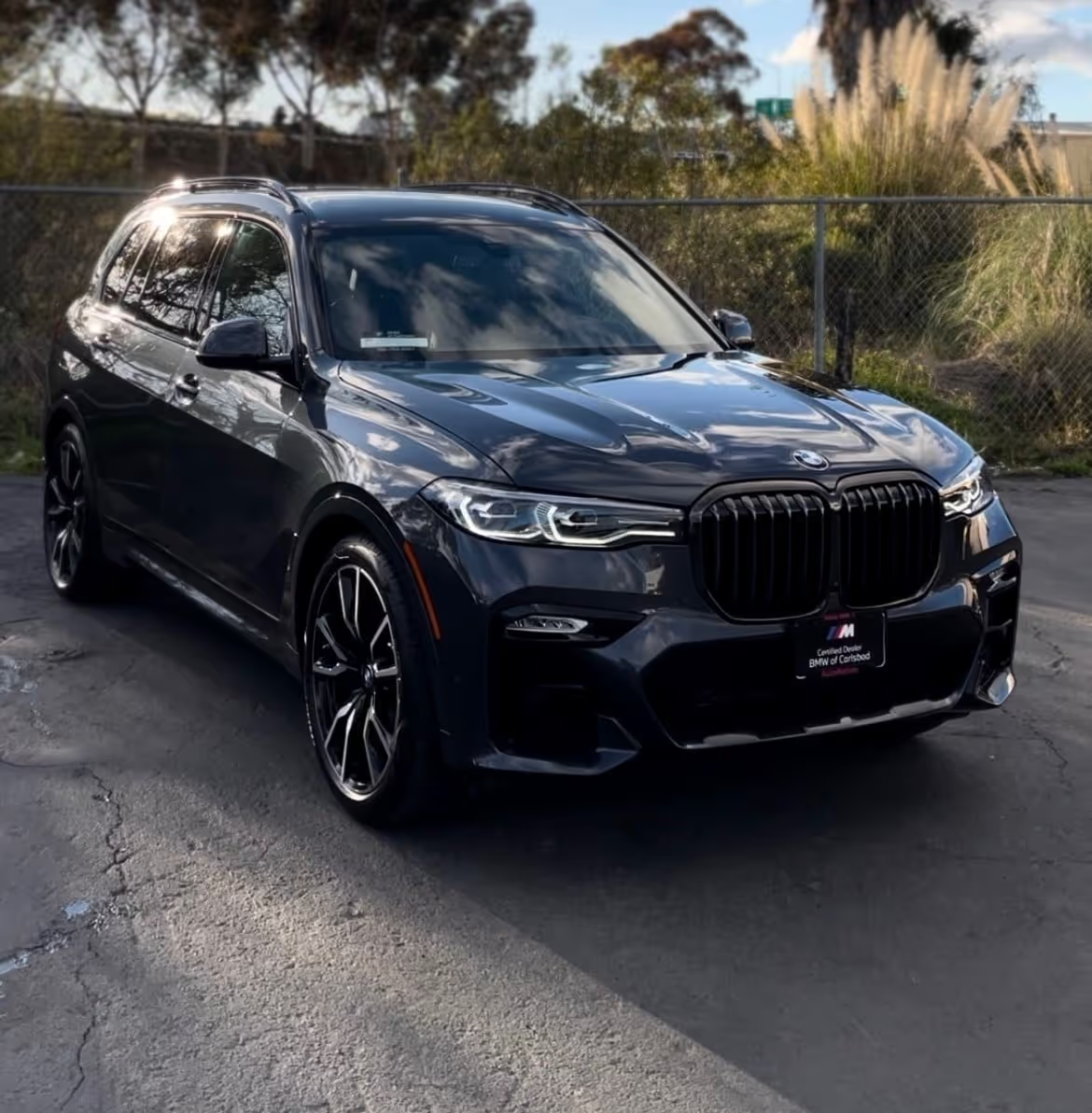
This is the window tinting comparison we get asked about most, because it is the one where both options are genuinely reasonable. We stock carbon and ceramic, so the answer here is not a sales pitch for the expensive one.
Carbon window tint uses carbon particles instead of dye. This window film rejects around 50% of heat, blocks 99% of UV rays, and does not fade the way a dyed tint does.
Ceramic window tint uses nano-ceramic particles that target infrared heat directly. Our ceramic lines reject 76% and 95% of heat at the same UV figure.
The gap is heat, not UV. If the car lives outside, ceramic earns the difference. If it is garaged and the budget is tight, carbon is a sound choice.
What carbon window tint is
Carbon sits in the middle of the window tinting range, between cheap dyed tint and ceramic.
A dyed film works by absorbing visible light, and the dye degrades under the UV it was fitted to block, which is why old dyed tint turns purple and bubbles. Carbon window tint is made by replacing that dye with carbon particles embedded in the layer. They absorb light and some solar heat, and they do not break down the same way, so a carbon tint holds its color for years rather than fading.
The carbon window tint we fit is GeoShield C2 Carbon. It rejects 50% of heat, blocks 99% of UV, and carries a three-year film warranty. One practical detail: it is available in shop only, and it is stocked in 50%, 35%, 20% and 5% shades, there is no 70% option in the carbon line.
What ceramic window tint is
Ceramic window film attacks the problem from a different direction. Instead of absorbing light, non-metallic ceramic particles absorb and re-radiate infrared radiation specifically, while letting visible light through.
That decoupling is the whole point. Because infrared is invisible, a ceramic film can be light and still reject most of the heat. A dark carbon tint cannot beat a light ceramic one on heat, which is counter-intuitive until you know what each material is doing. Ceramic tint uses the same physics at every shade.
We run two ceramic lines. GeoShield Pro Nano Ceramic rejects 76% of heat and is specified as low haze. GeoShield Apex Ultra Ceramic rejects up to 95%. Both block 99% of UV, both carry a lifetime film warranty, and both are stocked in 70%, 50%, 35%, 20% and 5%.
The key differences between carbon and ceramic window tint
| Carbon window tint | Ceramic window tint | |
|---|---|---|
| Active material | Carbon particles | Nano-ceramic particles |
| Heat rejection | 50% | 76% to 95% |
| UV protection | 99% | 99% |
| Fading | Does not fade like dyed film | Does not fade |
| Optical clarity | Good | High, low haze |
| Signal interference | None | None |
| Shades stocked | 50%, 35%, 20%, 5% | 70%, 50%, 35%, 20%, 5% |
| Legal front-window option | No, the line starts at 50% | Yes, at 70% |
| Mobile service | No, shop only | Yes |
| Film warranty | 3 years | Lifetime |
| Price, full vehicle | $249 to $399 | $349 to $699 |
Heat rejection and UV protection compared
This is the only row where the two materials are far apart, and it is worth being precise rather than vague about it.
| Package | Film | Heat rejection | UV rejection | Warranty |
|---|---|---|---|---|
| Bronze Carbon Tint | GeoShield C2 Carbon | 50% | 99% | 3 years, shop only |
| Silver Ceramic Tint | GeoShield Pro Nano Ceramic | 76% | 99% | Lifetime |
| Gold Ceramic Tint | GeoShield Apex Ultra Ceramic | 95% | 99% | Lifetime |
Read the heat column as 50, 76, 95. Compared to carbon, a premium ceramic film gives better heat rejection at every shade. The step from carbon to Pro Nano Ceramic adds 26 points for $100 on a sedan, which is the best-value move anywhere in our range, and the step to Apex Ultra adds another 19 points of superior heat rejection.
Now read the UV column: 99% on all three. Each tint blocks the same amount of ultraviolet, so carbon and ceramic are identical there. Carbon tint blocks UV just as completely as the premium ceramic film does. If your goal is to stop the dashboard fading, the leather hardening and UV rays reaching your arm through the glass, carbon does that job completely. You are not buying better UV protection when you move up, you are buying superior heat performance and a longer warranty.
That is the single most useful thing to understand here, because a lot of window tinting marketing blurs heat and UV together as though they move in step. They do not.
Put plainly: the benefits of carbon tint are UV protection, color stability and price. The benefits of ceramic are heat, clarity and coverage. Both sit well above a regular tint made with dye.
Does carbon tint look darker than ceramic?
Not inherently, and this trips people up.
Darkness is set by the shade you order, not the material. A 20% carbon film and a 20% ceramic film are the same darkness. What differs is what happens behind that darkness: the ceramic one will be cooler and slightly clearer to look through, so visibility at dusk is marginally better.
Where the impression comes from is the range itself. Carbon is stocked from 50% down, so the lightest carbon job is noticeably darker than the lightest ceramic job at 70%. If you see carbon cars and ceramic cars side by side, the carbon ones do tend to be darker, not because of the film, but because of which shades people order it in.
Carbon also has a slightly flatter, more matte look to some eyes, where ceramic reads a little cleaner. That is a subtle aesthetic difference, not a performance one.
The cons of carbon tint
Since carbon is the cheaper option, it is worth being straight about its limits.
- Half the heat rejection. 50% against 76% or 95%. On a car that bakes in an open lot all day, you feel that.
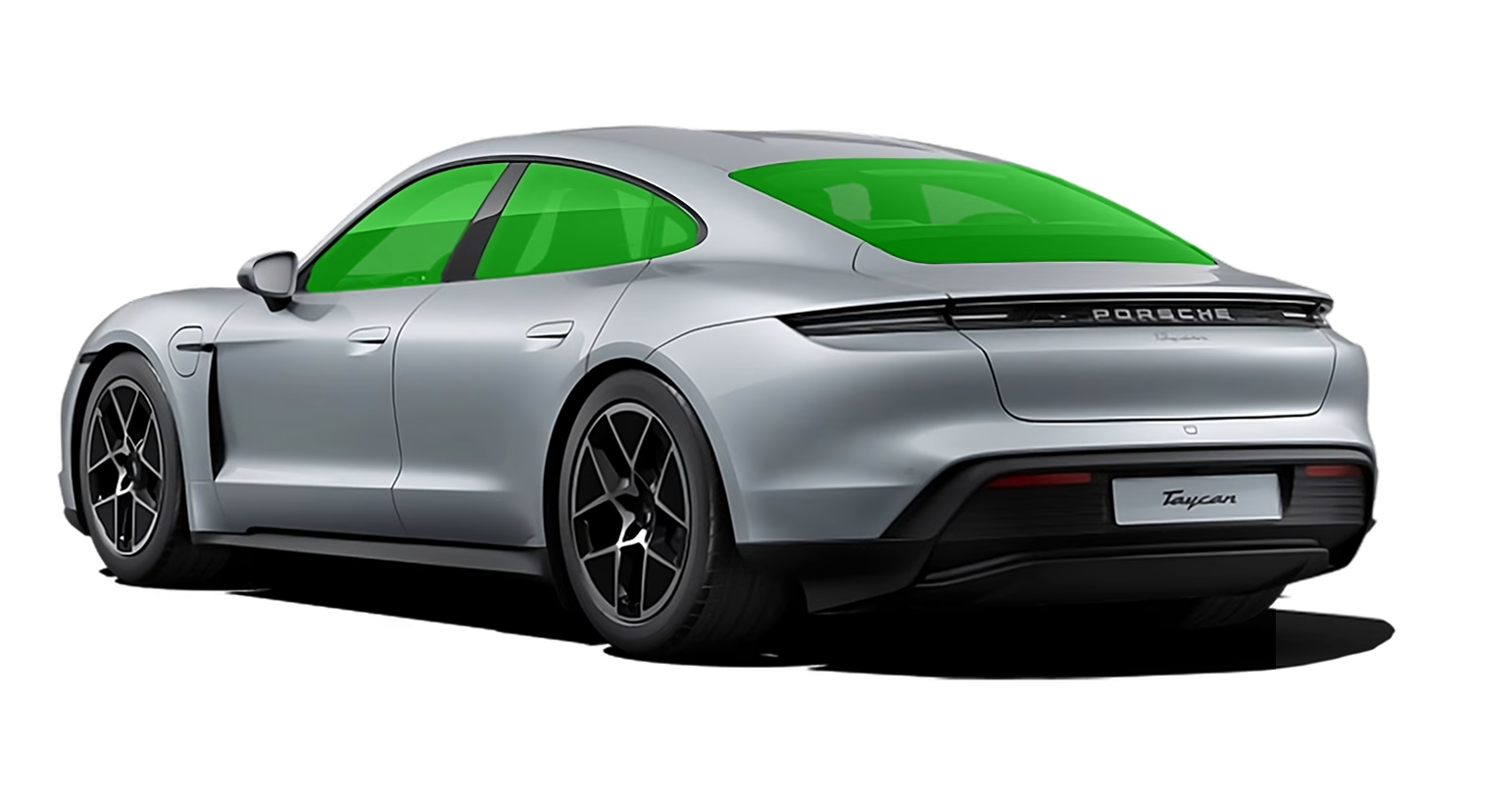
- No legal front-window shade. The carbon line starts at 50%, and California requires front side windows to transmit more than 70% of light counting the glass. If you want film on the front sides, you need the ceramic line. The rules are covered in our guide to window tint legality in San Diego.
- Shop only. Carbon is not available as a mobile install. If having us come to your home or office matters, that alone decides it.
- Three-year warranty instead of lifetime. Carbon is durable and will not fade like dyed film, but the coverage is finite.
- Slightly less optical clarity than the low-haze ceramic, which costs a little visibility at dusk.
None of that makes carbon a bad film. It makes it a film with a narrower set of right answers.
How to compare carbon vs ceramic on a quote
If you are holding two quotes from different shops, three lines tell you nearly everything.
The heat rejection figure. A number should be printed. If a quote says “ceramic” with no figure, that word is doing a lot of unearned work, ceramic films vary enormously, as our own 76% and 95% lines show.
The warranty. Lifetime versus a fixed term is the manufacturer telling you what it expects from its own product. Across the types of window tint films on sale, warranty length tracks quality more reliably than price does.
Whether a 70% shade is offered. This is a quick proxy for whether the film line is genuinely the premium one, because high-transmission film is harder to make well.
Beyond that, compare the two types of window tints on the things you will actually notice: cabin temperature, visibility at night, and whether you will still like it in five years. Either way you are choosing between carbon and ceramic on performance rather than on the label.
What carbon and ceramic tint cost
Shade is included in every package, so choosing 35% over 20% costs nothing. Vehicle size and film line set the price.
| Package | Coupe | Sedan | Compact SUV | Truck | Full-size SUV |
|---|---|---|---|---|---|
| Bronze Carbon | $249 | $299 | $329 | $349 | $399 |
| Silver Ceramic | $349 | $399 | $429 | $449 | $499 |
| Gold Ceramic | $549 | $599 | $629 | $649 | $699 |
Those cover every window except the front windshield and sunroof. For the front two windows on their own the carbon film is $149, Pro Nano Ceramic $199 and Apex Ultra Ceramic $249. Full pricing sits on the mobile window tinting page.
If there is old film to come off first, removal is charged at $90 per hour, and the window tint disclaimer covers the risk around rear defroster lines on long-baked film.
Which suits San Diego
The deciding factor locally is where the car spends its day.
Parked outside in San Marcos, Escondido or El Cajon, a vehicle takes eight or nine hours of direct sun for most of the year. The difference between rejecting 50% and 95% of infrared heat is something you notice every time you open the door, and it is the clearest case for ceramic we see.
Garaged, or parked in structure parking downtown, and driven mainly in the evening? Carbon covers the UV, holds its color, and saves you real money. Customers in that position often choose carbon and are right to.
On the coast, where glare matters more than raw temperature, either window tinting option handles it, but the 70% ceramic option is the one that lets you put film on the front glass legally.
Ceramic or carbon: choosing the right tint for your car
Whether ceramic or carbon is better for your car comes down to sun exposure and budget, and plenty of people correctly choose carbon tint once they know the trade. Carbon tint provides everything a garaged car needs, while ceramic tint provides the heat performance an outdoor car wants.
Choose carbon if budget is the deciding factor, the car is garaged or shaded, you can bring it to the shop, and you are tinting the rear only. Carbon tint offers 99% UV protection and a film that will not fade.
Choose Pro Nano Ceramic if you want a real drop in cabin temperature from a film that also blocks solar heat harder for a modest step up in price, you want mobile service, or you want a film with a lifetime warranty. For most San Diego drivers this is the sensible default.
Choose Apex Ultra Ceramic if the vehicle lives in open sun, you are sensitive to heat, or you want maximum performance at a light shade so the car looks close to untinted.
The short version
On carbon vs ceramic tint, both block 99% of UV rays and neither fades like dyed film. The real differences are heat rejection (50% against 76% or 95%), the shade range, mobile availability and the warranty.
Carbon is the value choice for a garaged car having its rear glass done in shop. Ceramic is the better film if the car sits in the sun, if you want film on the front windows legally, or if you want us to come to you. The honest rule: buy ceramic for heat, buy carbon for budget, and do not pay extra expecting better UV.
We handle window tinting across San Diego County and install both films. Call (760) 310-1532 or book online.
This article is general information, not legal advice. Check current California requirements with the DMV or CHP before choosing a tint level.