50% is the point on the scale where window tint becomes visible without becoming a statement. It is also the film most often chosen by people who were not sure they wanted tint at all.
50% VLT transmits half the visible light. You can see it on the glass, but nobody would describe the car as tinted.
Against no tint you gain glare reduction, 99% UV protection, a cooler cabin if you buy a ceramic film, and a slightly calmer interior.
You do not gain privacy. At 50% the inside of the car is still perfectly visible.
What 50% changes that 70% does not
If you have read 70 tint vs no tint, the obvious question is why go two steps darker when the near-clear film already delivers the UV and heat performance.
The answer is glare reduction, and it is the one benefit that genuinely tracks with darkness rather than with film construction.
Glare is visible light. Blocking half of it does something a film blocking 30% cannot. On a low westbound sun, on wet tarmac after a rare rain, or on the chrome of the car in front in stop-start traffic, 50% VLT takes a real edge off. Drivers who describe themselves as light-sensitive notice this more than any other single benefit of tinting.
The second difference is subtler: the cabin feels different. Half the light is a lot of light. The interior reads calmer and less washed out, particularly on a car with a light-colored interior that bounces sun around.
What you trade for it is a small amount of visibility at night, though this is the last tint percentage where most drivers report no meaningful change at all.
It helps to be precise about the number. 50% is a visible light transmission figure: half the light transmission of bare glass, which is why tint percentages in this range read as light rather than dark. A dark window tint at 20% or 5% is a different proposition entirely, and one worth choosing deliberately rather than drifting into.
If you want a middle ground, 35% is the shade that sits between them, and the trade-offs at 35% are set out in our 20 window tint vs 35 comparison. Plenty of drivers run 35% on the rear and keep a lighter window tint up front.
50% vs no tint
| No tint | 50% tint | |
|---|---|---|
| Visible on the car | Not applicable | Slightly, on close inspection |
| Glare reduction | None | Genuine, half the visible light |
| UV protection | Partial, glass only | 99% at any film line |
| Heat rejection | Minimal | 50% to 95% depending on film line |
| Privacy | None | Effectively none |
| Night visibility | Baseline | Essentially unchanged |
| Interior fading | Unprotected | Substantially slowed |
| Front windows in CA | Permitted | Not permitted, too dark |
| Rear window and rear sides in CA | Permitted | Permitted |
Where the heat actually comes from
This bears repeating because it is the single most common misunderstanding in tinting, and it costs people money in the wrong direction.
| Package | Film | Heat rejection | UV rejection | 50% available |
|---|---|---|---|---|
| Bronze Carbon Tint | GeoShield C2 Carbon | 50% | 99% | Yes, this is its lightest shade |
| Silver Ceramic Tint | GeoShield Pro Nano Ceramic | 76% | 99% | Yes |
| Gold Ceramic Tint | GeoShield Apex Ultra Ceramic | 95% | 99% | Yes |
Three films, one tint percentage, and a heat rejection spread from 50% to 95%. If a cooler car is your objective, that table is the decision. How dark you go is a styling choice sitting on top of it.
This is also the difference between a quality film and the cheap tint sold on price alone: dye in the layer blocks light by being dark and does comparatively little about heat, which is why we do not stock it. Worth noting too that 50% is the lightest option the Bronze Carbon line carries, making it the entry point for the most affordable package. Anything lighter means one of the ceramic lines by definition.
Who 50% actually suits
Drivers who dislike dark cars. There is a real personality split here. Some people find dark glass cocooning, others find it oppressive. 50% is for the second group, and there are more of them than the market suggests. It cuts heat and UV without darkening the car in any obvious way.
Light-sensitive drivers. Anyone who wears sunglasses from the moment they get in the car. Half the visible light removed is a noticeable improvement to daily comfort, and nothing about it makes the road difficult to see.
Family cars where the rear is already dark. Many SUVs have factory privacy glass behind the B-pillar. A 50% film on the forward glass of the rear compartment lightens the mismatch rather than deepening it, which is sometimes the look people want.
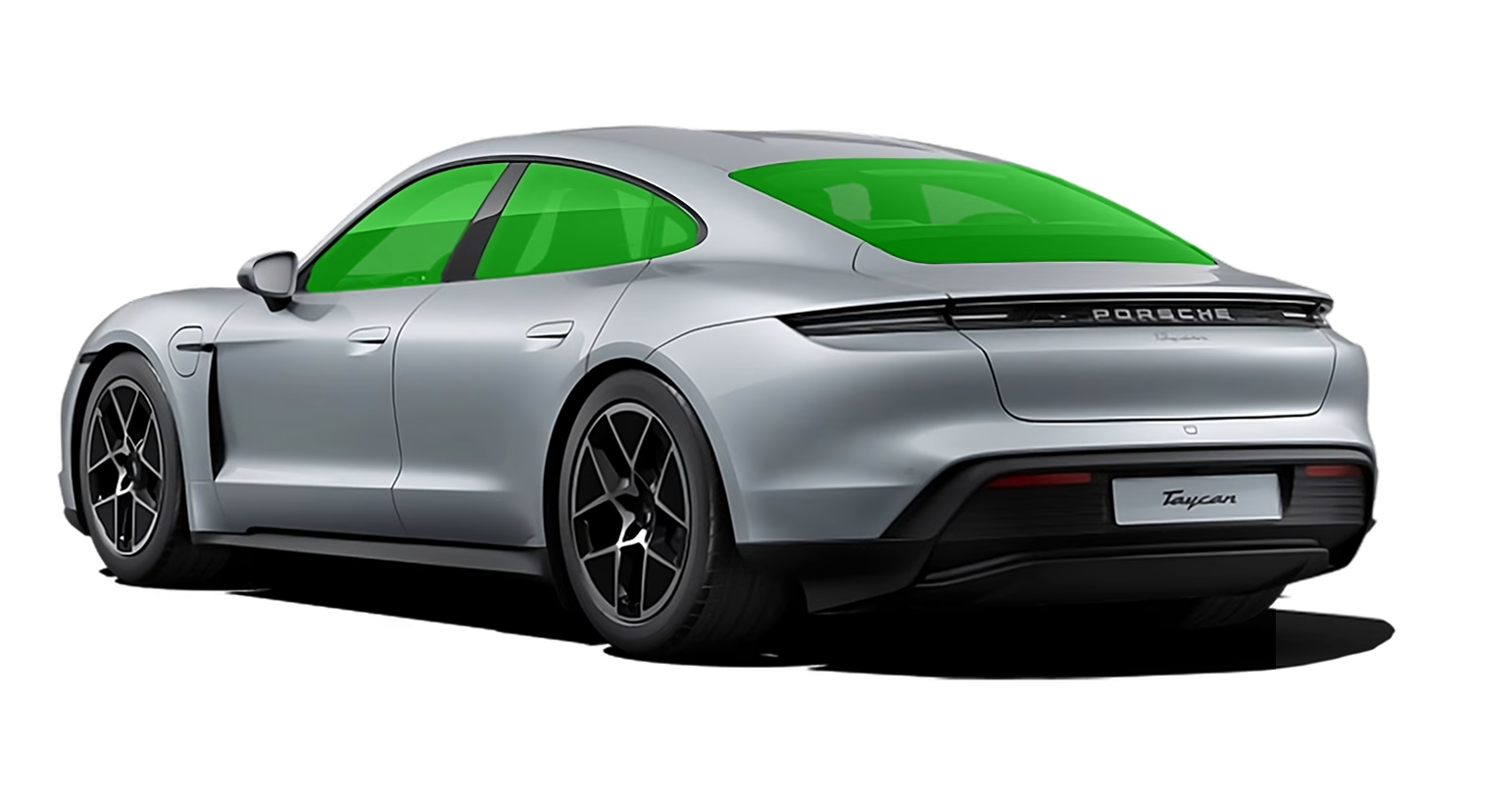
Sunroofs and windshield tint. Overhead glass takes more direct sun than any other panel, and a 50% film on a sunroof is a common add-on for a cabin that gets uncomfortably bright. We fit these at $100 with Pro Nano Ceramic or $200 with Apex Ultra. Windshield tint is a separate service again, priced on its own, and there the rules are stricter.
Anyone hedging. If you are unsure whether you want tint, this is the one you will not regret. Going darker later means removal at $90 per hour and starting over, so hedging light is cheaper than hedging dark. Ask your installer to hold a sample against the car first: how the tint looks on your own paint and glass settles it faster than any chart.
The San Diego angle
Coastal North County makes an unusually strong case for lighter film. Mornings in Encinitas, Cardiff and Solana Beach spend a good part of May and June under a marine layer that is genuinely dim, and dark glass in flat gray light is more of a nuisance here than it is in Phoenix.
Then the same day turns into hard afternoon sun off the water. That combination, dim mornings and bright afternoons, is exactly what a light film with high heat rejection is built for. Sun protection is the year-round argument underneath it: UV rays reach the front and rear windows every day the car is outside, and a high-quality film gives you better UV protection on the door windows than glass alone ever will.
Inland, where the mornings are brighter and the afternoons hotter, more drivers step past 50% toward 35% or 20% for the rear glass while keeping the front light.
When to skip it
If the car is garaged, driven mainly at night, or about to be sold, film is a hard sell and we will tell you so.
If you want to stop people seeing inside the car, 50% will disappoint you. It is not the tint for that, and no amount of technology changes it. Go to 20% behind the driver instead.
And if your budget covers one thing only, put a high-quality film on the car window that faces the sun rather than a cheap dyed film on every pane. One good film beats five poor ones for what you will actually feel in bright sun.
Local laws are the last thing to settle. Tint rules in California are set at state level, so check your state requirements rather than assuming the car is fine because it was tinted elsewhere. A dark tint on the front glass is the one combination that reliably causes trouble.
What it costs
The shade is included, so 50% costs the same as any other shade within a package. Vehicle size and film line set the price.
| Package | Coupe | Sedan | Compact SUV | Truck | Full-size SUV |
|---|---|---|---|---|---|
| Bronze Carbon | $249 | $299 | $329 | $349 | $399 |
| Silver Ceramic | $349 | $399 | $429 | $449 | $499 |
| Gold Ceramic | $549 | $599 | $629 | $649 | $699 |
Those cover all windows except the front windshield and sunroof, both of which are priced separately. Silver and Gold carry a lifetime film warranty; Bronze carries three years and is available in shop only. Prices are estimates until the vehicle has been seen, and a covered area is recommended for installation. Full detail is on the mobile window tinting page.
The short version
On 50 tint vs no tint, 50% is the shade that earns its place through glare reduction and comfort rather than privacy or looks. Against bare glass you get 99% UV rejection, meaningfully less glare, a slower-fading interior, and night visibility that stays essentially as it was.
It is not a privacy tint and it should not go on your front side windows in California. What it is, is the shade most people are actually describing when they say they want their windows done but do not want a dark car.
Smith Bros installs across San Diego County. Call (760) 310-1532 or book online and we will hold the samples against your own glass first.
This article is general information, not legal advice. Check current California requirements with the DMV or CHP before choosing a tint level.