These two shades sit next to each other on every shade card, and people agonize over the choice far more than the five points between them deserve. In daylight most drivers cannot reliably tell tinted windows at one shade from the other. After dark, in an unlit parking lot, backing out of a space, the difference is real.
15% is the darker tint. A 15% film lets 15% of light through. A 20 percent tint lets 20% through. Lower number, darker glass.
The gap is 25%, not 5%. Fifteen is a quarter darker than twenty in relative terms.
Neither is legal up front in California. Both are fine on the rear windows. Neither comes close to what the front windows require.
What window tint percentage actually means
Window tint percentage is visible light transmission, usually shortened to VLT. It is the share of light that passes through the glass with the tint film on it. A 20% film transmits 20% of light and blocks the other 80%.
So lower is darker, which trips people up constantly, because the instinct is to read a bigger number as more tint.
One detail matters before you compare shade cards: the number describes the film, not the finished window. Factory glass already blocks light on its own, typically transmitting 75 to 85 percent. Add film and the combined result is darker than the film’s rating alone. Most SUVs carry tinted rear glass from the factory, which pushes it darker still.

15 vs 20 tint: how much darker is 15?
In a controlled measurement, the 15 and 20 films differ by a quarter of the light getting through. Here is what that means in practice.
| 20% tint | 15% tint | |
|---|---|---|
| Visible light transmission | 20% | 15% |
| Relative darkness | Baseline | About 25% darker |
| Daytime privacy | Silhouettes visible up close | Slightly harder to make out |
| Seeing out after dark | Workable | Noticeably reduced |
| Glare control | Good | Marginally better |
| UV blocking | 99% either way | 99% either way |
| Heat reduction | Set by the film, not the shade | Set by the film, not the shade |
| Legal on CA front windows | No | No |
| Legal on rear glass | Yes | Yes |
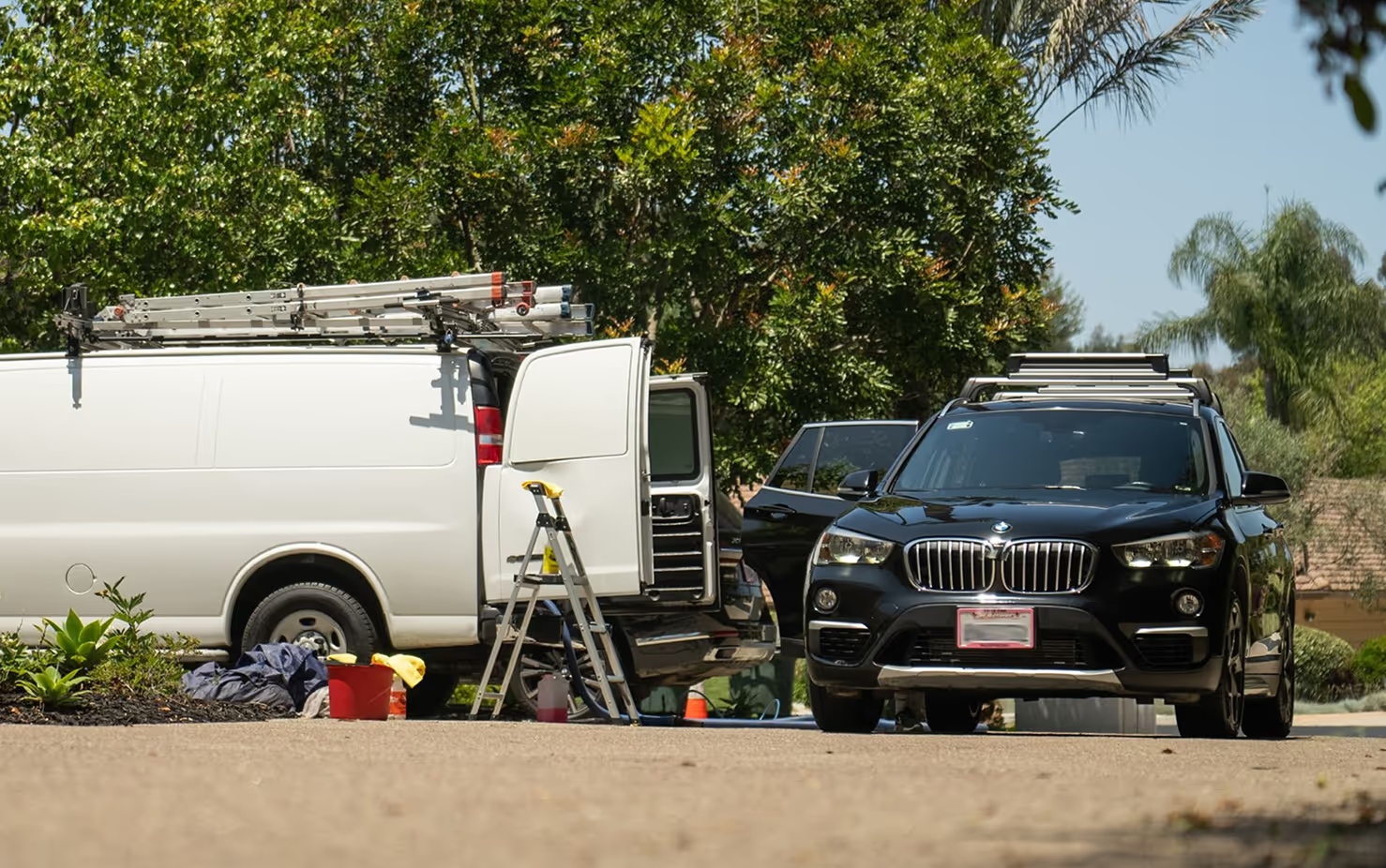
Parked side by side on a bright San Diego afternoon, you would struggle to pick them apart from ten feet away. A slightly lighter shade only reveals itself in low light.
Privacy, heat and UV protection
Privacy. Both stop a casual glance from making out what is on your back seat. Neither hides anything once the interior lights are on at night, which is the limit of what any dark tint does. If you want maximum privacy, 5% is the shade people actually mean.
Heat. This is where the 20 vs 15 debate usually goes wrong. Darkness and heat rejection are different properties. Heat is blocked by what the film is made of, not by how dark it looks. Our Apex Ultra rejects 95% of heat, our Pro Nano rejects 76%, and our C2 Carbon rejects 50%, and each is available across the shade range. A premium film at 70% VLT beats a cheap dyed film at 15% comfortably.
UV rays. Effectively a tie. Any quality ceramic film blocks about 99% of UV regardless of shade, so it is not a reason to go darker. That is worth knowing if your concern is skin exposure or a dashboard that keeps cracking.
If the reason you want a darker tint is that your car gets hot, the shade is not the lever. The film technology is. We cover that in ceramic tint vs regular tint and carbon vs ceramic tint.
Visibility: is 15 tint too dark at night?
For some drivers, yes. This is the one genuine functional difference between the two.
At 15%, reversing out of an unlit driveway, reading a curb, or spotting a cyclist on the rear quarter all get harder, especially at night in the rain. The effect compounds with age, and drivers over 50 tend to feel the step down more.
At 20% most people adapt within a week and stop noticing. That is roughly where the practical threshold sits for daily driving. And if your rear glass is already tinted from new, a 15% film over it lands far darker than 15%, and the rear view can become genuinely poor.
Tint laws and legal considerations in California
Neither shade is legal on the front two windows here, and it is worth being blunt, because it is the most common misunderstanding we deal with.
| Window | California rule |
|---|---|
| Front windows | Must allow more than 70% VLT, film and glass combined |
| Rear side windows | Any darkness |
| Rear windshield | Any darkness, with working side mirrors |
| Windshield | Top 4 inches only, non-reflective |
Both shades are legal on the rear glass and neither is legal up front. If you get pulled over it is a fix-it ticket, and the citation goes to the driver rather than the tint shop that installed it. Our full breakdown is in is 20% tint legal in San Diego, alongside the window tint disclaimer.
The setup that satisfies almost everyone stays within legal limits: a dark film on the rear glass for privacy, and a high transmission film on the front that still rejects most of the heat.
What we offer, and where 15 sits
Our tint packages run 70%, 50%, 35%, 20% and 5% VLT. We do not stock a 15% shade.
That is worth saying plainly, because you will find 15% on plenty of shade cards elsewhere. If you have decided you want darker than 20%, the next available tint from us is 5%, which is limo dark and a very different look. If 15% specifically is what you want, another shop can do it, and we will not pretend otherwise.
What we would ask first is what you are trying to fix. If it is heat, a better film at the same shade does more than a darker film of the same type. If it is privacy on the rear glass, 20% already does the job and keeps your night visibility intact.
Choosing the right tint
Daily driver, street parked, night driving: 20%. The safer default, and you will stop thinking about it.
Rear glass privacy on a family car: 20% on the rear sides. Dark enough for car seats out of sight, light enough to reverse safely.
You want the darkest look and rarely drive at night: 5% on the rear, not 15%. If you are going to go darker, go dark deliberately.
Your car gets unbearably hot: stay at 20% or lighter and put the money into a better film instead.
Front windows, any car: a 70% film. It is the only option here that is road legal.
The short version
On 20 tint vs 15, the 15% film is about a quarter darker, both are illegal on California front windows, both are legal on the rear, and the only meaningful day-to-day difference is what you can see out of after dark. Heat reduction and UV blocking come from the ceramic film, not the tint percentage.
We install window film across San Diego County, from Escondido to the coast, and we will talk you out of a shade that does not suit how you drive. Call (760) 310-1532 or book online. Shades and pricing are on the mobile window tinting page.
This article is general information, not legal advice. Check current California requirements with the DMV or CHP before choosing a tint level.