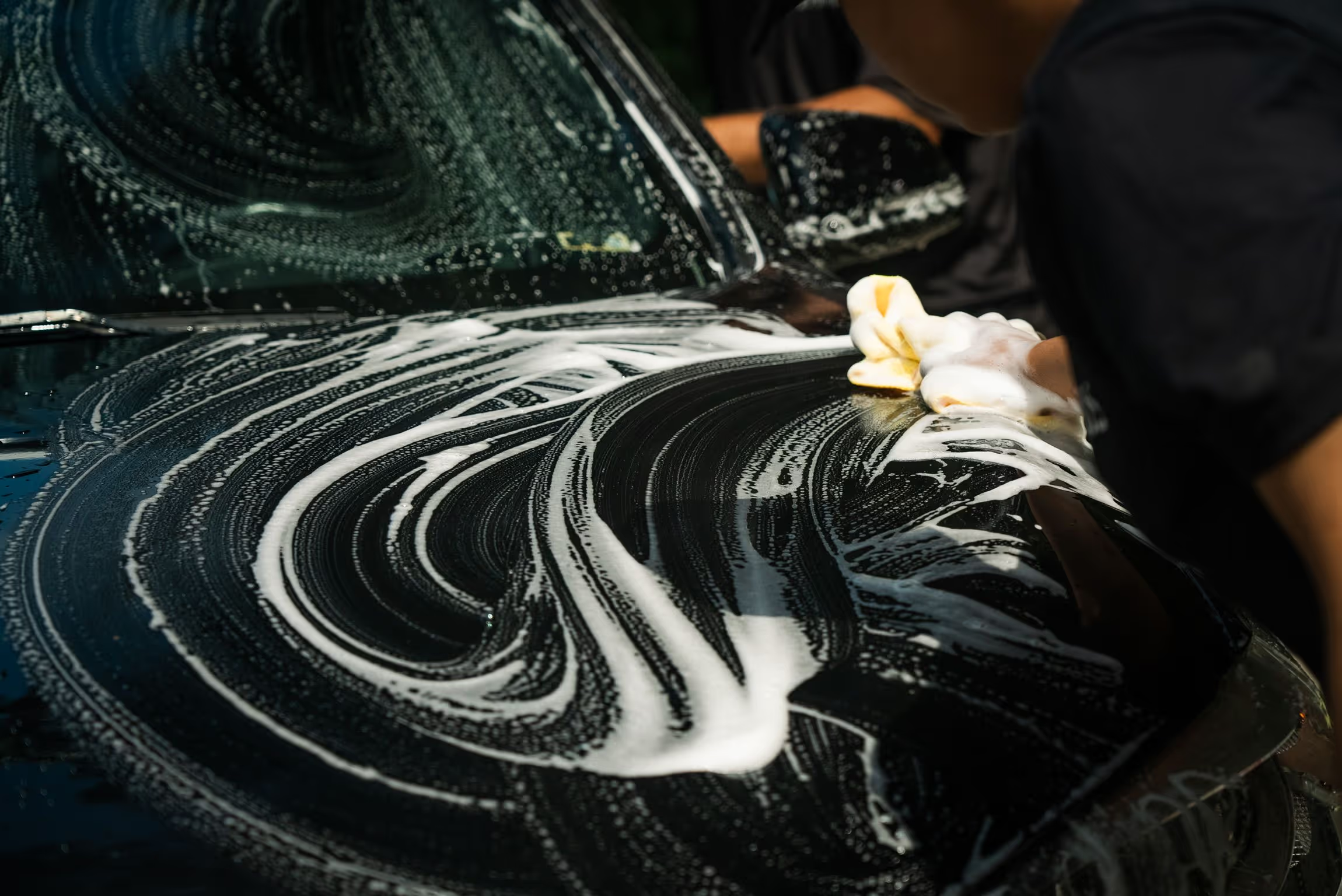
This question comes up more than you would expect, usually after someone has seen a neighbor get a warning or read something alarming on a community forum. The short answer is reassuring. The detail behind it is worth knowing, because the part people get wrong is not the washing.
Yes, washing your own car at your own home is legal in San Diego.
What is regulated is the runoff. Soapy water that reaches a storm drain is treated as a discharge of pollutants, because storm drains here flow to the ocean without any treatment.
Why storm drains are the whole issue
Most people assume storm drains connect to a treatment plant somewhere. They do not.
San Diego County runs two entirely separate systems. The sanitary sewer takes everything from inside your house, sinks, showers, toilets, and sends it to be treated. The storm drain system exists to stop streets flooding, and it discharges to creeks, the bay and the ocean essentially as it arrives.
That means anything going into a gutter reaches the coast in roughly the state it left your driveway. When you wash a car, the runoff is not just soap. It carries brake dust, which contains copper and other metals, oil and fuel residue, road grime, and whatever detergent you used. Copper in particular is toxic to marine life at low concentrations.
This is why the rules focus on discharge rather than the act of washing. Nobody is coming to stop you cleaning your car. The concern is the gutter.
What this means practically
You are not required to stop washing at home. You are expected to keep the runoff out of the storm drain. A few habits handle it.
Wash on a surface that absorbs. Grass, gravel or dirt lets water soak in, where soil filters it. A lawn is the simplest solution available to most people and it waters the grass at the same time.
Slope the work away from the street. If your driveway falls toward the curb, move the car to the flattest spot you have, or park it on the lawn for the wash.
Use a shut-off nozzle. A hose running continuously wastes an enormous volume of water and creates far more runoff than you need. A trigger nozzle cuts both.
Go easy on soap. More detergent does not clean better. It just puts more surfactant into the water and takes longer to rinse.
Use biodegradable, phosphate-free soap. It is not a licence to send it down the drain, but it reduces harm if some escapes.
Empty buckets into the sink, not the gutter. Dirty wash water belongs in the sanitary sewer, which is what any indoor drain feeds.
Rules vary by city, and they do change
San Diego County contains eighteen incorporated cities plus unincorporated areas, and stormwater enforcement sits with each jurisdiction under a regional permit. The underlying principle is consistent, which is that non-stormwater discharges to the storm drain are prohibited, but specific local ordinances, exemptions and enforcement practice differ.
Drought conditions add another layer. During declared water restrictions, additional rules can apply to outdoor water use, including vehicle washing, and those change with conditions rather than staying fixed.
Because of that, treat this article as orientation rather than a legal ruling. For your address, check the current guidance from the City of San Diego Stormwater Department or your own city’s stormwater program before assuming anything specific. If you have received a notice, that notice names the ordinance you should read.
What if you live in an apartment or an HOA?
This is where most of the real-world friction sits, because the legal question and the practical one come apart.
Many apartment complexes and homeowner associations prohibit car washing on the property outright. That restriction usually has nothing to do with city stormwater law. It exists because shared parking areas drain directly to storm drains, and the property, not you, is the permit holder responsible for what leaves the site.
An HOA rule is enforceable as a contract term regardless of what the city allows. Read your CC&Rs rather than assuming municipal rules override them, because they do not.
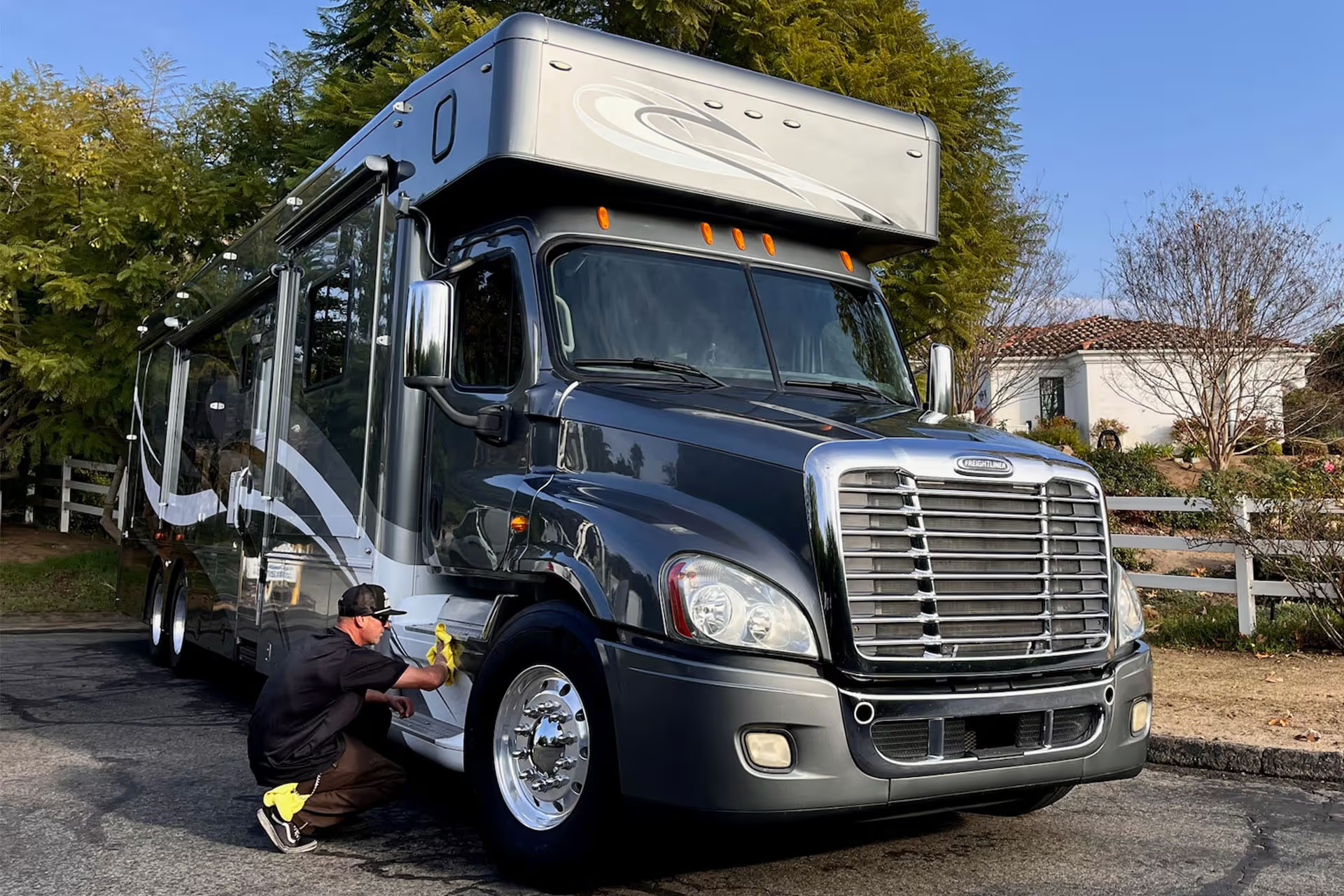
If washing on site is not allowed, the options are a commercial wash, a waterless or rinseless product used on a single vehicle in a parking space where nothing runs off, or a mobile detailer who manages their own water and runoff. The last of those is the usual answer for people in condos and apartments across the county.
Waterless and rinseless washing
Worth knowing about, because they sidestep the runoff question almost entirely.
Waterless wash is a spray-on product with lubricants that encapsulate dirt so it can be lifted with a microfiber towel. No hose, no runoff. It works well on light dust and poorly on genuinely dirty cars, and using it on heavy grit risks dragging that grit across the paint.
Rinseless wash uses a small amount of water in a bucket with a polymer solution, typically two gallons for a whole car against the hundred-plus a hose wash consumes. The wash water goes down an indoor drain into the sanitary sewer when you are done.
Both are legitimate methods rather than compromises, and both are common in apartment settings and during drought restrictions. Neither is a substitute for a proper decontamination when the paint actually needs one.
Why professional washing usually sends less to the ocean
There is a reasonable assumption that doing it yourself must be gentler than paying someone. For water, it is usually the reverse.
A garden hose runs somewhere in the region of ten gallons per minute. A home wash with the hose running through a rinse can put well over a hundred gallons onto the driveway, most of which heads for the curb.
Professional mobile detailing uses a fraction of that. The work is done with controlled application rather than open flow, which is partly an environmental choice and partly practical, because a van carries its own water. Commercial fixed-site washes are held to their own standard and are typically required to capture wash water for treatment or recycling rather than releasing it.
So the ranking, from most runoff to least, tends to be: hose left running on a sloped driveway, then careful bucket wash on grass, then commercial or professional washing.
The other reason to think about how you wash
Runoff aside, driveway washing is where a lot of paint damage begins.
Washing in direct sun, which is most of the day here, means soap and water dry on the panel before you rinse. Hard water dries into mineral deposits that etch clear coat if left in the heat. And a single bucket with a sponge picks up grit on the first pass and drags it across the paint on every pass after.
None of that is a legal problem. It is just how cars end up covered in fine swirl marks that only show in direct sunlight. If you want the detail on timing, we have written separately about the best time of day to wash your car.
The short version
Washing your car at home in San Diego is legal. Letting the soapy runoff reach a storm drain is not, because those drains carry it untreated to the ocean. Wash on grass where you can, use a shut-off nozzle, keep the water out of the gutter, and empty buckets indoors.
Rules vary by city and shift with drought conditions, so check your local stormwater guidance for anything specific to your address.
If you would rather not think about any of it, Smith Bros has been washing cars across San Diego County since 1994 and brings its own water. Call (760) 310-1532 or book online.