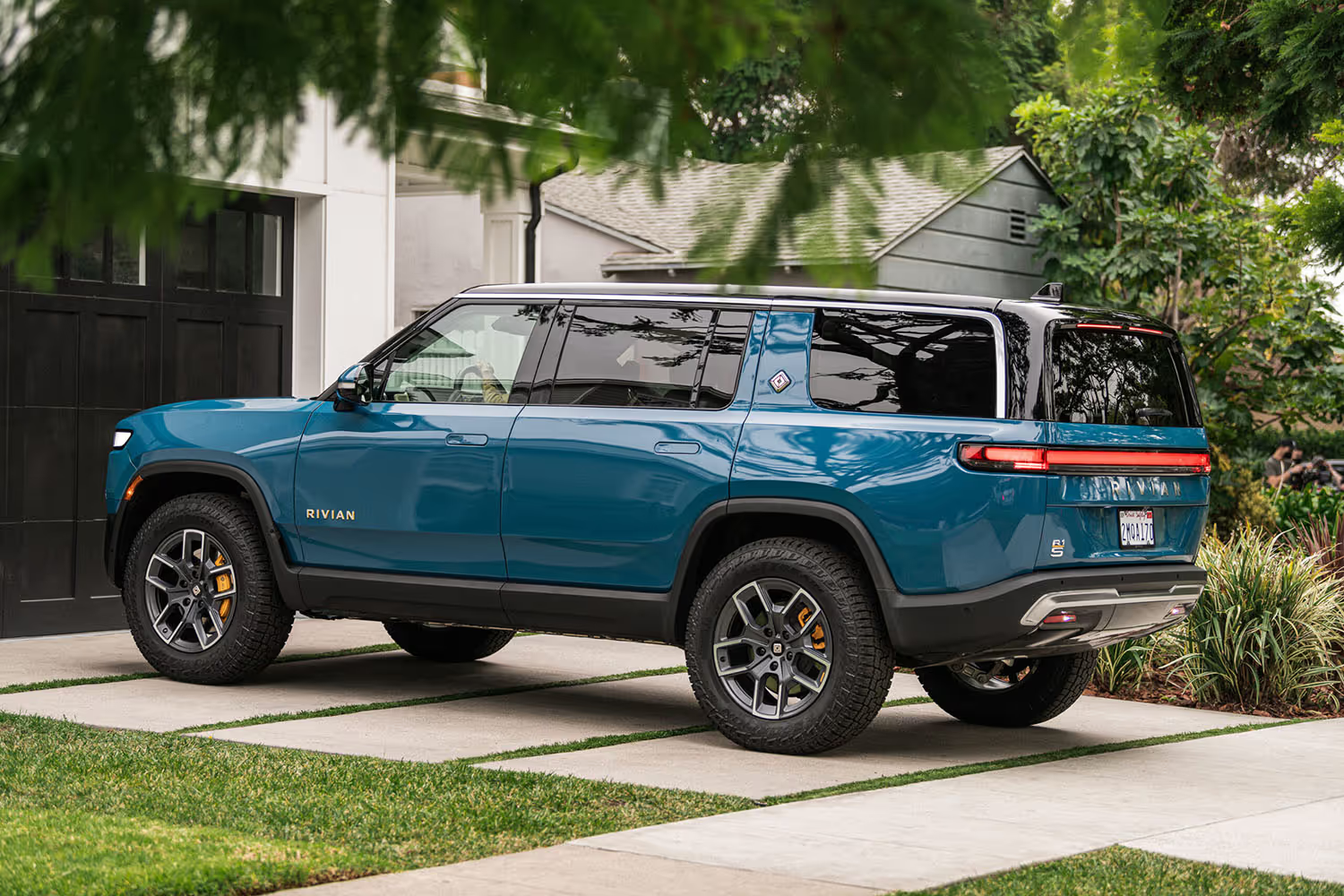
There is a right answer to this, and it has almost nothing to do with your comfort.
Early morning or early evening, on cool paint, out of direct sun.
In San Diego that usually means before about 10am or after about 4pm. In high summer, push both further toward the ends of the day.
Why direct sun is the problem
When you wash a car, you are managing a race between rinsing and evaporation. Sun on paint makes evaporation win.
Panel temperature in San Diego sun climbs well beyond air temperature, and on a dark car it climbs further still. Water hitting hot paint starts drying immediately, sometimes before you have finished the panel.
Two things follow.
Soap dries on the surface. Dried detergent leaves streaks and residue that need rewashing, so you end up doing the job twice and touching the paint twice as much, which is its own problem.
Water leaves its minerals behind. This is the serious one. San Diego water is hard, meaning it carries dissolved calcium and magnesium. When a droplet evaporates, those minerals stay as a white ring. In strong sun the deposit can etch into the clear coat, and at that point it stops being a cleaning problem and becomes a polishing job.
That is the whole case. Washing in midday sun does not just produce a worse result, it can actively damage the finish.
Morning or evening?
Both work. They fail differently.
Early morning gives you cool paint that has had all night to shed heat, calm air, and rising light to work by. The drawback is dew, which is mostly harmless but means more water to dry.
Early evening gives you paint that has been cooling for a few hours and comfortable working conditions. The risk is running out of light and leaving water behind, which dries overnight into exactly the spots you were trying to avoid.
If forced to pick one, morning is slightly better, because you finish with the day ahead of you rather than racing dusk.
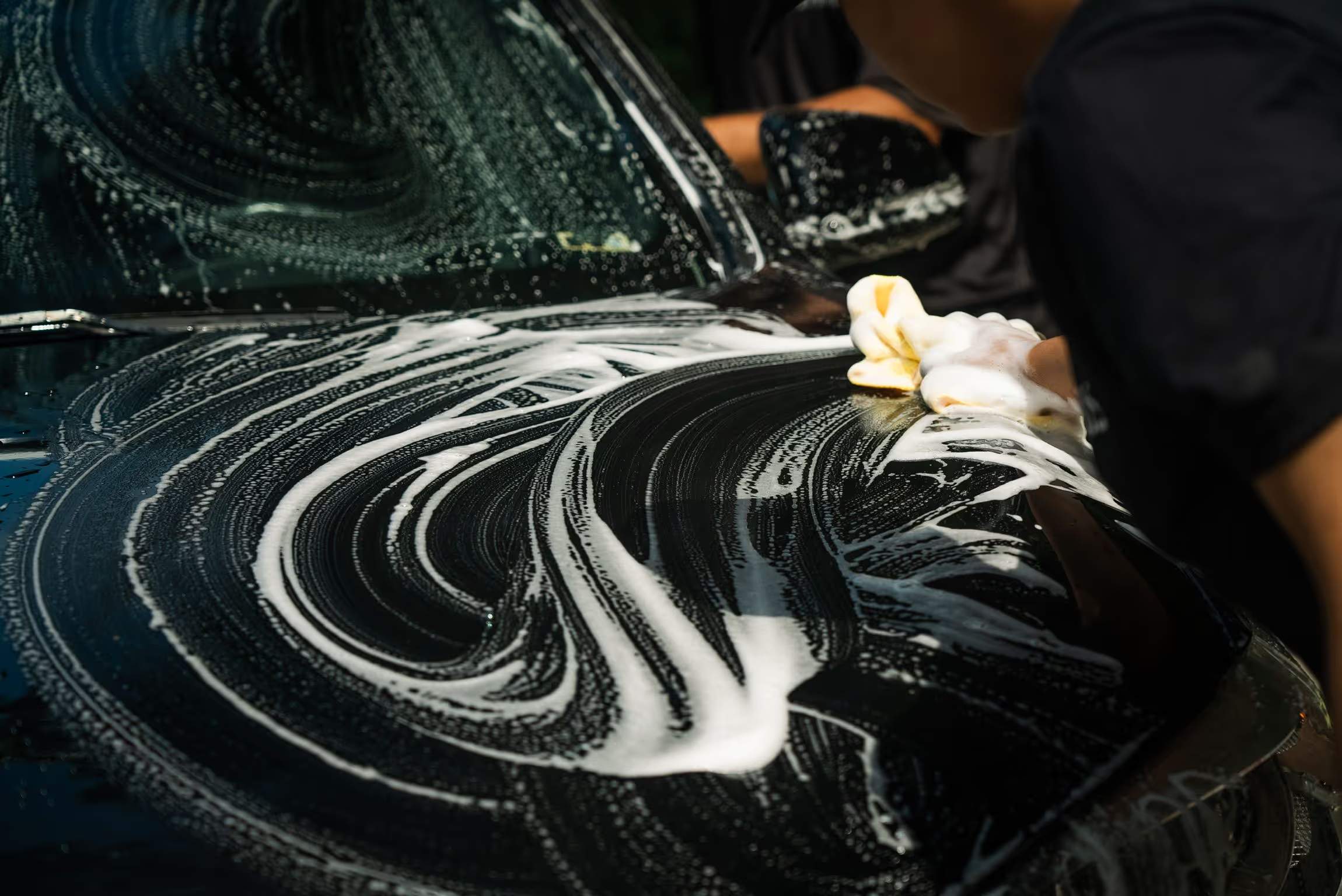
Test the panel, not the sky
The most useful habit here is to stop judging by whether it looks sunny.
Put the back of your hand on the hood. If it is warm, the car is not ready, regardless of shade. A vehicle that spent the morning in full sun holds heat for a surprisingly long time after you move it, and thermal mass does not care that the sky is now overcast.
Same rule after driving. Paint is warm and brake components are hot, and cold water onto hot brakes is best avoided. Give it time before starting.
The La Jolla and coastal exception
Along the coast, the marine layer changes the calculation.
On a morning with heavy overcast, the paint stays cool and you have a wider window than an inland schedule would suggest. That is a genuine advantage for anyone in La Jolla, Pacific Beach or Del Mar.
The trade is humidity. Water evaporates more slowly in damp air, which is good for avoiding etching but means you must dry the car properly rather than expecting it to finish on its own. Air drying in humid conditions leaves spots just as reliably as it does in the sun, only slower.
Coastal cars also carry salt aerosol, which argues for washing more often rather than at a particular hour.
Does the season change the answer?
San Diego does not have dramatic seasons, but the useful window does move through the year.
Summer. The window narrows at both ends. Panel temperatures climb fast after sunrise and stay high late, so aim for before 9am or after 5pm. Mid-afternoon in August is the worst possible time to put water on paint here.
Winter. The window widens considerably. Weaker sun and lower temperatures mean much of the day is workable, though the daylight itself runs shorter, so an early evening wash can run out of light sooner than you expect.
Marine layer months. Late spring and early summer bring heavy morning overcast to coastal areas, which keeps paint cool well into the day. Inland, the layer burns off earlier and the usual rules apply.
Santa Ana conditions. Hot dry winds are the exception where washing is close to pointless. Airborne dust settles on wet paint almost immediately, and the low humidity dries water faster than usual. Wait for it to pass.
How often should you actually wash?
Timing matters less than frequency, and frequency depends mostly on where the car sleeps.
Garaged, driven occasionally. Every three to four weeks is generally fine.
Parked outside, daily driver. Every one to two weeks. Contamination accumulates continuously and the longer it sits in this sun, the more likely it is to bond or etch.
Parked under trees. More often, and deal with sap and droppings the same day they land regardless of your schedule. Both etch quickly.
Coastal. Every week or two. Salt aerosol settles constantly within a few miles of the water, and it is corrosive over time even though it never looks like much.
The point of frequency is not appearance. It is that nothing gets long enough to bond to the clear coat, which is where cleaning stops working and correction starts.
What matters more than timing
Timing is worth getting right, but three other things matter more.
Drying, rather than letting it air dry. This is the single biggest cause of water spots. A blower or a clean drying towel with light pressure. Do not leave it to finish itself.
Two buckets. One with soap, one with clean water to rinse the mitt after each panel. A single bucket returns the grit you just removed straight back onto the paint, and that is how swirl marks accumulate.
Working top down. The lower panels carry the heaviest grit. Starting there and working up drags the worst contamination across everything else.
Get those right at noon and you will still beat a badly executed wash at dawn.
Where sprinklers come in
Worth flagging because it undoes good work overnight.
Lawn sprinklers hitting a parked car are among the most common causes of water spotting in San Diego neighborhoods. The water is hard, it lands in the small hours, and it dries on the panel in morning sun with nobody there to intervene.
If your car parks within reach of a sprinkler head, adjusting the head is a five minute job that saves a recurring problem. This matters more in the days after a wax or ceramic coating, when the finish is still settling.
What professionals do differently
Mobile detailing works through the middle of the day, which looks like a contradiction until you see the method.
The difference is deionized water. Running water through a deionizing filter removes the dissolved minerals, so when it dries it leaves nothing behind. No minerals means no spots and no etching, which removes most of the timing constraint.
Add controlled application rather than a hose left running, touchless blow drying rather than air drying, and shade where available, and the sun stops being the deciding factor. That is why every Smith Bros wash package specifies deionized water.
The short version
Wash early morning or early evening on cool paint, out of direct sun. Test the hood with your hand rather than judging by the sky. Coastal overcast widens your window but demands proper drying.
And if the choice is between washing at a bad hour or not washing at all, wash. Contamination sitting on paint for another week does more harm than one poorly timed wash.
If you would rather it happened correctly regardless of the hour, Smith Bros brings deionized water to your address anywhere in San Diego County. Call (760) 310-1532 or book online.