This comparison comes up a lot and it is slightly the wrong question, because a wrap and a ceramic coating are not really competing. One changes what the car looks like. The other changes how the surface behaves.
A vinyl wrap is a printed film laid over the paint. It changes color or finish, hides the original paint, and adds a thin layer of cosmetic protection.
A ceramic coating is a liquid polymer that bonds to the surface and cures hard, making it slick, hydrophobic and far easier to wash.
They stack. You can apply a ceramic coating over a wrap, and on a matte or satin wrap it is one of the better things you can do for it.
What a vinyl wrap does
A wrap is about appearance first. You are buying a color change, a matte or satin finish, or a print you cannot get from the factory, and you are buying it reversibly, because the vinyl comes off later and the paint underneath is preserved.
That reversibility is genuine protection of a kind. Vinyl shields the paint from light abrasion, bird droppings and UV while it is on, so a wrapped car often has better paint underneath than an unwrapped one of the same age.
What a wrap does not do is make the vehicle easier to look after. Vinyl is slightly porous, it holds dirt in its texture, and a matte wrap in particular shows fingerprints and water spots readily. Maintenance on a wrapped car is usually more work than on a coated one, not less.
We do not install wraps. We coat and maintain them, which is a distinction worth being clear about before you read our view on the comparison.
What a ceramic coating does
A ceramic coating is a liquid polymer that chemically bonds to the surface it is applied to and cures into a hard, transparent layer. It is microns thick, so it changes nothing about how the car looks beyond adding gloss and depth.
What it changes is behavior. Water beads and carries dirt off rather than drying on. Chemical attack from bug residue, sap and bird droppings is resisted rather than absorbed. Washing gets markedly quicker.
We apply three:
| Package | Coating | Protection |
|---|---|---|
| Bronze Ceramic Detail | TEC582 ceramic paint protection | Up to 1 year |
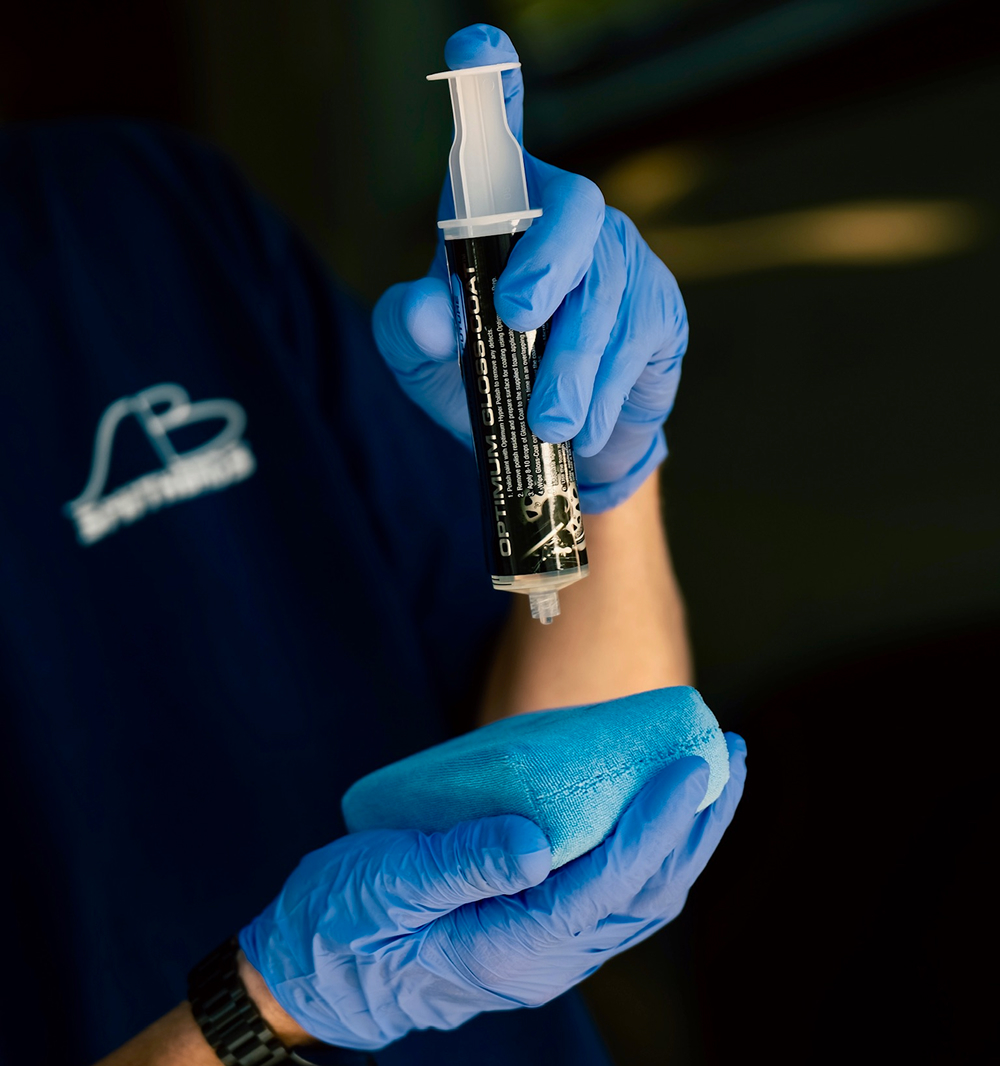
| Silver Ceramic Detail | Optimum Gloss Coat | Up to 3 years |
| Gold Ceramic Detail | Opti-Coat Pro | Up to 5 years |
Ceramic coating vs wrap: the key differences
| Vinyl wrap | Ceramic coating | |
|---|---|---|
| Main purpose | Change how the car looks | Change how the surface behaves |
| Changes color | Yes | No |
| Adds gloss to existing paint | No, replaces the finish | Yes |
| Makes washing easier | No, usually harder | Yes, markedly |
| Stops rock chips | No, that is PPF | No |
| Protects paint underneath | Yes, while fitted | Yes, as a bonded layer |
| Reversible | Yes, peels off | Wears off over years |
| Typical lifespan | Several years | 1 to 5 years by product |
| Can the other go on top | A coating can go over a wrap | Not the reverse |
| Starting cost | Four figures at most shops | From $599 |
Which is better, a ceramic coating or a wrap?
Pick by what you actually want changed. A wrap is the only way to change the color of the whole car; a coating is the cost effective way to improve shine, durability and upkeep on the paint you already have.
Choose a wrap if you want a different color or finish, you want the factory paint preserved underneath for resale, or you want something reversible. No coating will give you any of that.
Choose a ceramic coating if you are happy with the color and want the car to stay cleaner, shed water, resist staining and look deeper. This is the right answer for most people who like their paint and dislike washing.
Do both if you are wrapping anyway. A coating over the wrap solves the wrap’s weakest point, which is that vinyl is harder to keep clean than coated paint.
Neither stops a rock chip. If that is the worry, the product you want is paint protection film, and we cover that in ceramic coating vs PPF.
Can you apply a ceramic coating over a wrap?
Yes, and it is one of the more worthwhile things you can do to a wrapped vehicle.
Vinyl has a slightly open surface that traps dirt and takes up staining from bird droppings and fuel splash. A ceramic coating seals that surface, so the wrap stays cleaner, washes faster and keeps its finish longer.
Matte and satin wraps are the strongest case. They are notorious for showing fingerprints and water spotting, and a coating formulated to work with a matte finish reduces both without adding gloss that would ruin the look. We charge $90 for the matte or wrapped finish service on a detail, which uses a product specifically formulated for vinyl wraps and matte paint rather than a standard gloss soap.
One caution: tell your installer the car is wrapped before any work starts. A wrap should not be polished like paint, and the prep for a coating on vinyl is different from the prep on clear coat.
Can a wrapped car go through a car wash?
Avoid automatic tunnels with brushes. The brushes catch wrap edges and seams, and a lifted edge is how wraps start to fail.
Touchless automatic washes are safer but not ideal, because the high-pressure jets can also work at edges. Hand washing is the right answer for a wrapped car, and it is much quicker if the wrap is coated.
The same advice applies to a coated car, for a different reason: brush tunnels put the swirl marks into the surface that a coating was bought to help avoid.
Pros and cons of wrapping a car
- Cost. A quality wrap is a four-figure job at most installers.
- Harder maintenance, especially on matte, which shows marks easily.
- Edges and seams can lift over time, particularly after brush washes.
- It hides damage rather than fixing it. Dents and deep scratches still need correcting first.
- Removal takes labor, and a cheap wrap left on too long can be difficult to take off cleanly.
- No chip protection. Vinyl has some thickness but not enough to matter on impact; a stone will still chip the panel underneath.
- It can crack or degrade at the edges with age and UV damage, especially on a daily driver parked outside.
Pros and cons of a ceramic coating
- It does not change the look beyond gloss, so it is no help if you want a different color.
- No impact protection. A coating will not stop a chip.
- Prep is most of the work, so a coating costs more on neglected paint: $270 extra on a one-to-three-year-old car, $360 on anything older.
- It wears out. Rated up to one, three or five years depending on product, against a wrap that can be peeled and replaced.
- Curing needs shelter. Our Silver and Gold coatings are done at the shop or at an address with a garage.
What each costs
A ceramic coating is priced by vehicle size and product:
| Package | Coupe | Sedan | Compact SUV | Truck | Full-size SUV |
|---|---|---|---|---|---|
| Bronze Ceramic Detail | $599 | $649 | $699 | $749 | $799 |
| Silver Ceramic Detail | $799 | $849 | $899 | $949 | $999 |
| Gold Ceramic Detail | $1,299 | $1,399 | $1,499 | $1,599 | $1,699 |
A coating is the cheaper of the two as an initial investment, and as a protective layer it keeps contaminant damage off every panel rather than changing the look. Motorcycles start at $399, and RVs and boats are priced by the foot. Every tier includes a thorough exterior detail with clay treatment and a one-step polish. Ceramic glass and ceramic wheel faces are $200 each. Full pricing is on the ceramic coating page.
We do not quote wraps, so we will not invent a figure. Expect a quality color-change wrap to sit well above our top coating tier at most specialist installers, which is why the two are rarely a straight either-or decision on price alone.
The short version
On ceramic coating vs wrap, a wrap changes how the car looks and a coating changes how it behaves. A wrap gives you color, finish and reversibility. A coating gives you gloss, water beading and far less effort at the bucket.
If you are wrapping, coat the wrap. If you like your paint, skip the wrap and coat the paint. If you are worried about stone chips, neither is the answer and you want film.
We coat paint and wraps across San Diego County, including in Encinitas. Call (760) 310-1532 or book online.