If you have asked three shops what a ceramic coating costs and received three wildly different numbers, you are not being misled. Ceramic coating is not one product at one price. It is a category that spans a one-year sealant and a five-year professional-grade coating, applied to vehicles that range from a motorcycle to a forty-foot motorhome, over paint that might be showroom-fresh or fifteen years into a life parked under a jacaranda.
So here is the direct answer first, then the reasoning behind it.
In San Diego County, ceramic coating a car costs between $599 and $1,699. Motorcycles start at $399. RVs and boats are priced per foot, from $65 to $95.
Where your vehicle lands inside that range comes down to two things: how big it is, and how long you want the protection to last.
The short answer, by vehicle and tier
Smith Bros prices ceramic coating in three tiers, each built around a different coating with a different service life. Every tier includes the preparation work, and that preparation is what actually determines whether a coating performs.
| Vehicle | 1 year (Bronze) | 3 years (Silver) | 5 years (Gold) |
|---|---|---|---|
| Coupe | $599 | $799 | $1,299 |
| Sedan | $649 | $849 | $1,399 |
| Compact SUV | $699 | $899 | $1,499 |
| Truck | $749 | $949 | $1,599 |
| Full-size SUV | $799 | $999 | $1,699 |
| Motorcycle | $399 | $499 | $599 |
| RV / boat | $65/ft | $90/ft | $95/ft |
Those are the real published numbers, not estimates. You can see the full breakdown on the ceramic coating service page.
Why size changes the price
This one is straightforward: a full-size SUV has considerably more painted surface than a coupe, and every square foot of it has to be decontaminated, polished and coated by hand. A truck takes longer than a sedan. A motorhome takes days.
The $200 spread between a coupe and a full-size SUV within the same tier is close to a pure labor difference. Nobody is charging you more for the badge on the hood.
Why the tier changes the price much more
Moving from a one-year coating to a five-year coating roughly doubles the cost, and this is where most of the confusion in quotes comes from. Two shops can both say “ceramic coating” and mean products with a fivefold difference in service life.
Bronze: around one year
The entry tier uses TEC582, applied to painted surfaces after a thorough exterior detail, clay treatment and a single-stage polish. It is a genuine ceramic layer that gives you the slickness, the easier washing and the water behavior people associate with coatings. It just does not last as long.
This is the sensible choice if you lease, if you are preparing a car for sale, or if you want to understand what living with a coating is like before committing to a five-year product.
Silver: around three years
Silver steps up to Optimum Gloss Coat and widens the coverage: paint, trim, headlights and tail lights rather than paint alone. That trim and lens coverage matters more than it sounds. Faded gray trim and cloudy headlights are two of the clearest signals that a car has been sitting in the sun, and they are both preventable.
Gold: up to five years
Gold uses Opti-Coat Pro, a professional-grade coating that is not sold to the public and must be applied by a certified installer. Same coverage as Silver, considerably longer service life, and a deeper finish.
Over five years, Gold on a sedan works out at roughly $280 a year. Bronze re-applied annually over the same period costs more in total and involves five separate rounds of prep. If you intend to keep the car, the expensive tier is usually the cheaper decision.
The part of the price nobody advertises: preparation
Here is the single most useful thing to understand about ceramic coating quotes.
A coating is transparent and permanent-ish. It locks in whatever is underneath it.
Apply a five-year coating over swirl marks, and you have sealed in swirl marks for five years. Apply it over embedded brake dust and industrial fallout, and those stay too. This is why every legitimate tier above includes a clay treatment and a machine polish before anything gets applied, and why those steps are the bulk of the labor.
A shop quoting $250 for a “ceramic coating” on a full-size SUV is not doing that prep. They are wiping a consumer-grade product onto unprepared paint. It will look excellent for about two weeks.
When you compare quotes, the question to ask is not “what coating do you use”. It is “what happens to the paint before the coating goes on”. If the answer does not include decontamination and polishing, the price difference has just explained itself.
Paint condition can move the number
The tiers above assume paint in reasonable condition needing a one-step polish. Paint that is heavily swirled, oxidised or covered in water spots may need multi-stage correction first, and that is separate work priced on inspection.
This is not an upsell reflex. It is the same principle as before: correction is the step that makes the coating worth having. On a car that has been through automatic brush washes for years, skipping correction and coating anyway would be spending $1,400 to preserve the damage.
If you are unsure which category your paint falls into, a quick look in direct sunlight tells you most of it. Fine circular scratches visible in the sun are swirl marks, and they are extremely common on any car washed at a tunnel.
Mobile or at the shop?
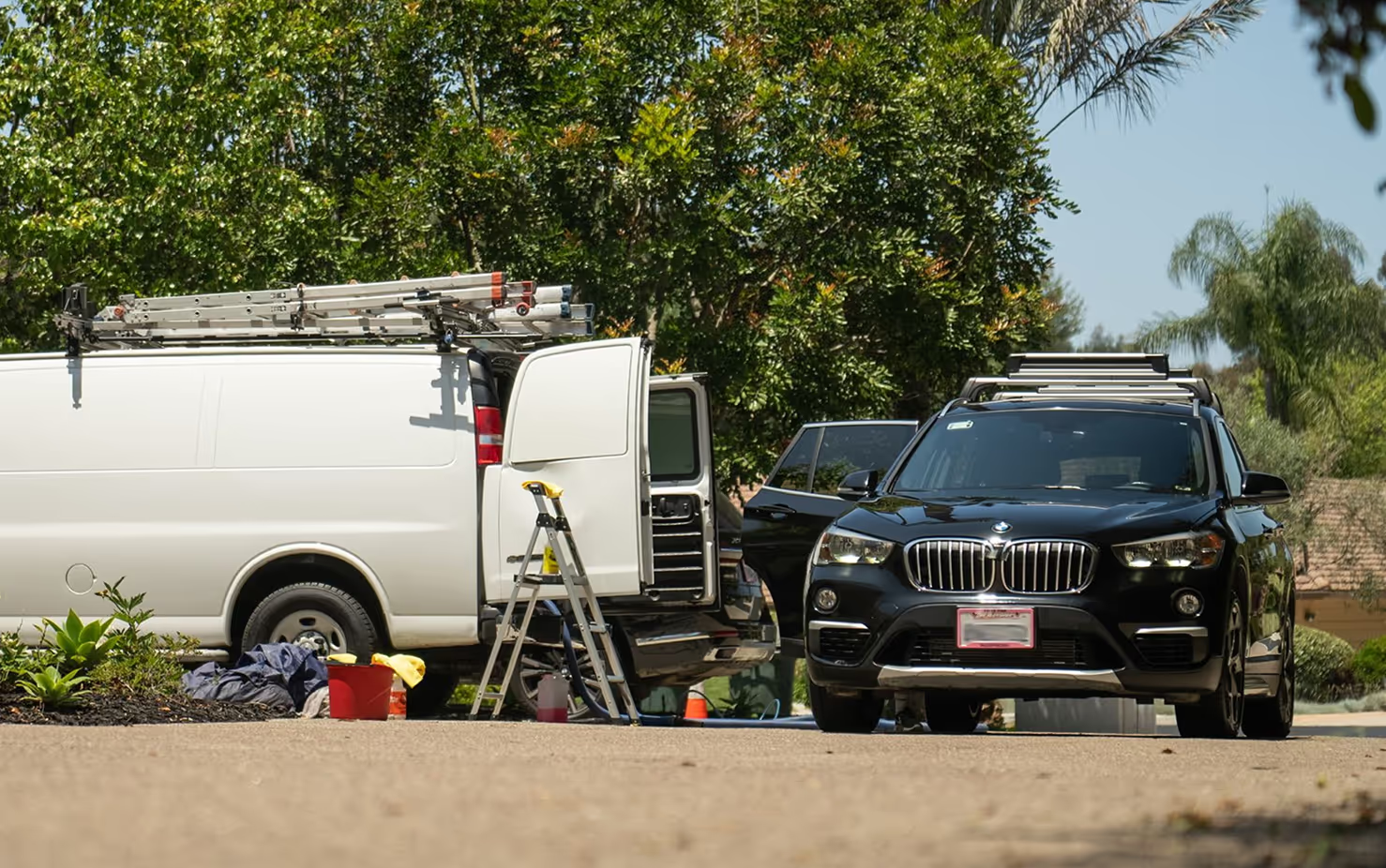
Smith Bros is a mobile operation. The van comes to your driveway, and has done since 1994. For ceramic coating there is one practical limit worth knowing before you book.
Bronze can be applied fully mobile. Silver and Gold need a controlled environment while the coating flashes and cures, which means either the Smith Bros shop or your own garage. Wind-blown dust, direct sun and a sudden marine layer all cause problems during curing, and a coating that cures badly cannot be fixed by wiping it off.
So: garage at home, and the longer-life coatings come to you. No garage, and they happen at the shop. Either way the quoted price is the same.
Is ceramic coating worth it in San Diego?
The regional case is genuinely stronger here than in most of the country, for four reasons.
Ultraviolet exposure. San Diego gets sun year-round, and UV is what oxidises clear coat, fades trim and clouds headlight lenses. A coating adds a sacrificial UV-resistant layer above the clear coat.
Salt air. Anywhere near the coast, and that covers a great deal of the county, paint sits in a mild salt aerosol every single day. It is far gentler than road salt in a snowy state, but it is relentless.
Hard water. San Diego’s water is hard, and hard water leaves mineral deposits when it dries on paint. Left in the sun, those deposits etch into the clear coat. Coated paint releases water more readily and gives you a longer window to dry the car before spotting begins.
Long dry spells. Months without meaningful rain means dust, pollen and bird droppings accumulate and bake. Bird droppings are acidic and will etch clear coat in a single hot afternoon. On a coated surface they are far more likely to wipe off without leaving a mark.
None of this makes a coating mandatory. If your car lives in a garage and comes out on Sundays, a good wax is defensible. If it sits outside at an office park in Kearny Mesa all week, the arithmetic changes quickly.
Ceramic coating versus wax versus PPF
These three get compared as if they compete. They mostly do not.
Wax or sealant costs the least, lasts weeks to a few months, and needs regular reapplication. It offers gloss and light water resistance, and essentially no scratch resistance.
Ceramic coating costs more upfront, lasts one to five years, and gives strong chemical, UV and water-spot resistance plus a mild increase in surface hardness. It does not stop rock chips.
Paint protection film is a physical urethane layer that does stop rock chips. It costs more than coating and is usually applied to impact zones such as the hood, bumper and mirrors. Many people run film on the front end and coating over everything, which is the belt-and-braces answer.
If your main worry is gravel on the I-15, film is the honest recommendation, not coating. If it is sun, water spots and wash-induced swirls, coating is the right tool. Have a look at paint protection film if chips are the concern.
What a ceramic coating will not do
Coatings get oversold, and an oversold coating produces a disappointed owner in month three. Four honest limits.
It is not scratch-proof. Coatings add hardness at the surface and genuinely reduce the fine swirls that come from washing, because dirt releases more easily and you scrub less. A key, a bush along a narrow driveway or an automatic wash brush will still mark the finish.
It will not stop rock chips. Nothing measured in microns stops a stone at freeway speed. That is what film is for.
It will not fix what is already there. Coating is a preservation step, not a repair step. Existing swirls, etching and oxidation have to be polished out beforehand or they are sealed in.
It does not end washing. It makes washing quicker, safer and less frequent. A coated car left dirty for two months in the sun is still a dirty car with baked-on contamination.
Everything above is worth knowing before you spend $1,400, and any installer who bristles at these questions is telling you something useful.
How long does the work take?
Because preparation is the bulk of the job, coating is not a lunchtime appointment.
An entry-level coating on paint in good condition is a matter of hours. A longer-life coating involves a full decontamination, a machine polish across every panel and a careful application, and that realistically occupies most of a day. If the paint needs multi-stage correction first, it can extend beyond that.
The coating then needs time to cure before the car meets water. Your installer will give you the exact window for the product used, but plan on the car staying dry for several days rather than several hours.
The practical consequence: book it when you can leave the vehicle alone for a bit. Coating a car the morning before a road trip through rain is a poor use of the money.
The first week matters most
Curing is when a coating is at its most vulnerable, and most early failures trace back to this window rather than to the product.
Keep the car dry for the period your installer specifies. Watch for lawn sprinklers, which are the single most common way a freshly coated car in a San Diego neighborhood gets spotted overnight. Sprinkler water is hard, it dries in the sun, and the deposits land before the coating has fully hardened. Park away from them, or move the car.
Skip the automatic wash entirely, not just during curing but permanently if you can. And if something lands on the paint in that first week, bird droppings especially, remove it gently with plenty of lubrication rather than scrubbing at it dry.
Get the first week right and the coating performs to its rating. Get it wrong and you have bought a shorter-lived coating at the longer-lived price.
What it costs to maintain
A coating is not maintenance-free, and a shop that tells you otherwise is setting you up to be disappointed in year two.
Coated paint should be washed with pH-neutral shampoo, ideally by hand or touchless, and dried rather than left to air-dry. Brush tunnels are the fastest way to wear a coating out early. The coating resists chemicals and UV well, but it is not armor against spinning nylon.
For people who would rather not do it themselves, the Ceramic Mini Detail is a maintenance wash built for coated vehicles, from $259 for a coupe to $349 for a full-size SUV. It includes a foam cannon wash with deionised water, touchless blow drying, wheels and tires, and a full interior vacuum and wipe-down. Deionised water is the relevant detail: no dissolved minerals means no water spots as it dries.
How to compare two quotes properly
If you are holding quotes from different shops, four questions separate them faster than the headline price.
- Which coating, by name, and what is its rated service life? “Ceramic” alone means nothing. TEC582, Optimum Gloss Coat and Opti-Coat Pro are specific products with specific ratings.
- What preparation is included? Decontamination and machine polishing should be explicit. If they are not in the quote, they are not in the price.
- What surfaces are covered? Paint only, or paint plus trim, headlights and tail lights?
- Where does the work happen, and where does it cure? A five-year coating cured in a windy driveway is a five-year coating with problems baked in.
A shop that answers all four without hesitation is quoting real work. One that deflects to “it’s a professional-grade ceramic, best on the market” is quoting a bottle.
The short version
Ceramic coating in San Diego costs $599 to $1,699 for a car, $399 and up for a motorcycle, and $65 to $95 per foot for RVs and boats. Vehicle size moves the price a little; the coating’s service life moves it a lot. Most of what you are paying for is the preparation, because preparation is what determines whether the coating is worth applying at all.
If you want a straight answer for your specific vehicle, Smith Bros has been detailing across San Diego County since 1994 and will quote on the actual condition of your paint rather than a category. Call (760) 310-1532 or book online and we will come to you.