Most dirt is easy. Dust, pollen and road film all lift with a proper wash. The things that cause trouble are the ones that stop being dirt and start being part of the paint.
Here are the worst offenders in San Diego, roughly in order of how much they cost to put right.
Bird droppings: the fastest damage of anything on this list
Not the hardest to remove, but the most urgent, which is why it goes first.
Bird droppings are acidic. Left on a panel in direct sun they dry hard while the acid concentrates, and they can etch into the clear coat within hours. What you are left with is not a stain that cleans off. It is a shallow crater the shape of the deposit, and removing it means machine polishing.
Two practical rules. Get them off the same day. And never wipe one off dry, because dried droppings contain grit and seeds that will scratch the paint as you drag them across it. Soak the area first with plenty of water or a quick detailer, let it soften, then lift it away with light pressure.
Coated paint buys you time here rather than immunity. On a ceramic coated panel a dropping is far more likely to release cleanly, which is one of the more genuinely useful things a coating does.
Tree sap: bonds harder the longer it sits
San Diego is full of jacarandas, pines and eucalyptus, and all three drop sap.
Fresh sap is sticky and mostly removable. Cured sap is a hardened resin bonded to the clear coat, and no ordinary wash will shift it. Worse, sap contracts as it cures, which puts a small amount of stress on the finish underneath.
Removal means dissolving it, usually with a dedicated sap remover or isopropyl alcohol on a soft applicator, working patiently rather than scrubbing. Clay treatment handles what remains. What you should not do is pick at it with a fingernail or attack it with an abrasive household cleaner, both of which leave marks worse than the sap.
If you park under the same tree every day, this stops being an occasional job and becomes a maintenance schedule.
Industrial overspray: the one people misdiagnose
This is the contaminant most often mistaken for something else. The owner runs a hand over the paint and it feels gritty, like fine sandpaper, even though the car looks clean.
Overspray is airborne paint that has drifted and landed as thousands of microscopic droplets, each bonding to the clear coat. It comes from nearby spraying: construction, body shops, freeway maintenance, roof work. Because it is genuinely paint, washing does nothing at all.
Clay treatment lifts light contamination. Heavier cases need dedicated overspray removal, and severe cases need machine correction afterward. Smith Bros handles this as its own service, with overspray removal pages for several North County cities, largely because it happens in clusters when a project is running nearby.
If your car sat near construction and now feels rough to the touch, this is almost certainly what you have.
Hard water spots: the quiet San Diego problem
San Diego water is hard. When it dries on paint it leaves behind the dissolved minerals it was carrying, as a ring of white deposit.
Caught early, those wipe away with a dedicated remover. Left in the sun, the minerals etch into the clear coat and become permanent until polished out. This is the mechanism behind most of the faint cloudy patches people notice on dark cars.
The usual culprits are not rain. They are lawn sprinklers hitting a parked car overnight, washing in direct sun so the water dries before you can dry it, and rinsing with a hose then walking away.
This is why every Smith Bros wash package uses deionized water, which has the minerals stripped out and dries without leaving deposits.
Road tar: patience over force
Tar collects along the lower doors, rocker panels and behind the wheels, especially after driving on freshly surfaced roads.
It is not complicated to remove, but it punishes impatience. The correct approach is a tar remover left to dwell so it softens the deposit, then a gentle lift. Scrubbing at tar with pressure grinds it across the paint and adds scratches to the problem you started with.
Never reach for petroleum solvents from the garage. They will take the tar off and take your wax, sealant and possibly some trim finish with it.
Brake dust that has been baked on
Brake dust is not just dirt. It is hot metallic particles that embed themselves into wheel finish, and on a hot wheel they effectively fuse.
Left long enough it pits the finish permanently, at which point cleaning cannot recover it. Regular washing prevents this entirely, which makes it the most avoidable item on this list and one of the most common expensive ones.
Interior odor: the hardest job of them all
If we are ranking by difficulty rather than paint damage, nothing beats smell.
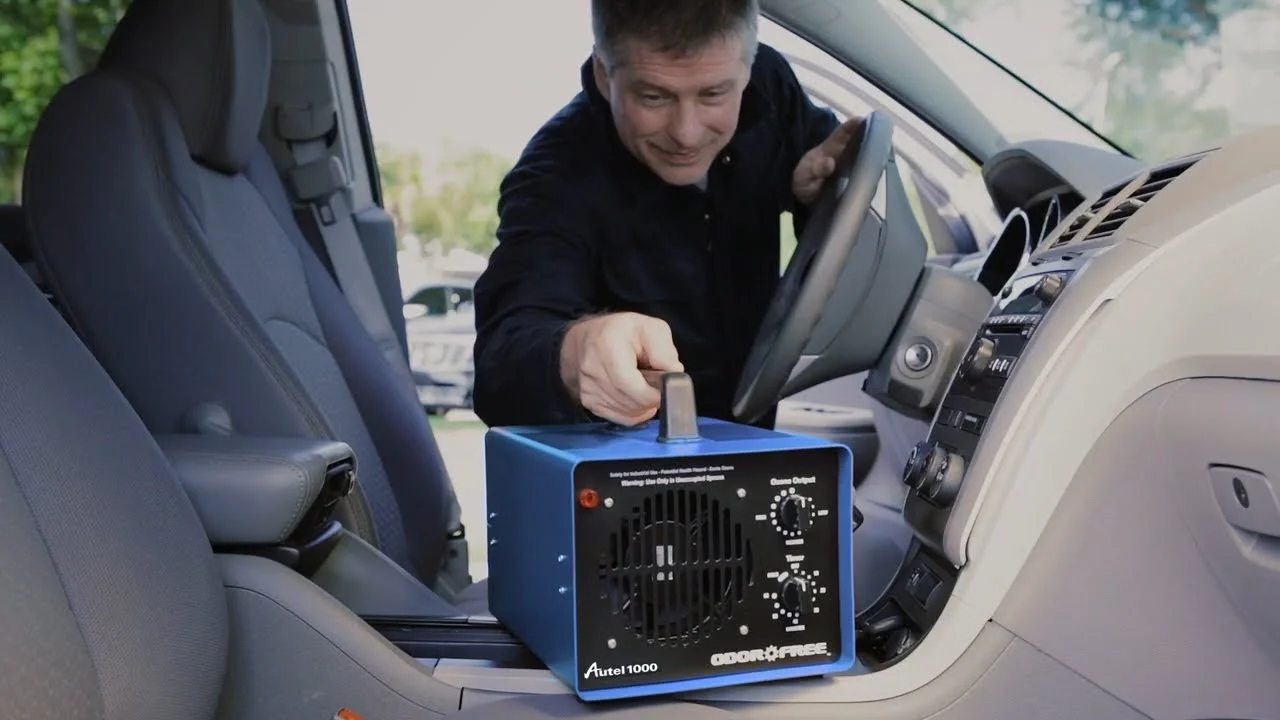
The reason is that odor is almost never on the surface. Smoke permeates the headliner, the vents and the foam inside the seats. Spilled milk soaks through carpet into the padding beneath. Pet odor lives in the fabric. Surface cleaning removes the evidence and leaves the source, which is why the smell returns a week later on the first warm day.
Real odor work means extraction, treating the source material, and in some cases ozone treatment. Smith Bros runs this as a separate specialty service precisely because it is not a detailing add-on.
Paint transfer and scuffs
Common in parking structures and tight San Diego streets, and frequently misread as a scratch that needs respraying.
Paint transfer is exactly what it sounds like. Another vehicle, a pole or a garage doorframe has left its own paint sitting on top of your clear coat. The giveaway is color: if the mark is a color your car is not, it is transfer rather than damage.
The good news is that transfer often comes off. A clay treatment or a dedicated compound will lift the deposited material, and if your clear coat underneath is intact, the panel returns to normal. It is one of the few entries on this list where the outcome is usually better than it first looks.
The test is a fingernail. Run it lightly across the mark. If it glides over, the damage is above the clear coat and is likely removable. If it catches, the clear coat itself is cut and you are into correction or refinishing.
Bug residue on the front end
Less of a year-round problem here than in wetter states, but it spikes after freeway runs through agricultural areas and inland valleys.
Insect residue is acidic. On a hot bumper or windshield it dries fast and starts working on the finish, and by the time it has baked in the sun for a few days it takes real effort to remove without scrubbing hard enough to cause its own damage.
The method is soak and wait rather than scrub. A dedicated bug remover left to dwell, or a damp microfiber laid over the area for a few minutes to soften the deposits before wiping. Dragging a dry towel over baked-on residue is how the front bumper ends up with fine scratches.
What actually prevents most of this
The list above has a pattern. Almost every item gets dramatically worse with time and sun, and San Diego supplies plenty of both.
Regular washing is the entire prevention strategy. Not because clean paint is inherently tougher, but because nothing gets the chance to bond, bake or etch. A dropping removed today is a non-event. The same dropping in a week is a polishing job.
Protection buys margin on top of that. Wax gives around three months of easier release. Ceramic coating gives one to five years of it, along with real resistance to chemical etching. Neither makes paint invulnerable, but both widen the window between “something landed on the car” and “something damaged the car”.
The short version
Overspray and cured sap are the hardest to remove because they bond to the clear coat. Bird droppings do the most damage fastest. Hard water spots are the most common in San Diego and the most preventable. Interior odor is the hardest job overall, because the source is rarely where the smell is.
The common thread is time. Nearly everything here is straightforward on day one and expensive by month two.
If something is already bonded on, Smith Bros has been dealing with it across San Diego County since 1994. Call (760) 310-1532 or book online.